H-1B Korean Document Translation for 2026: Preparing Degrees, Work Letters, and Company Records Without USCIS Delays
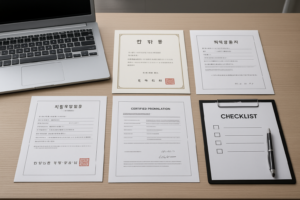 If you need H-1B documents translation Korean to English in 2026, accuracy matters far beyond simple word-for-word conversion. A weak translation can create confusion about your degree, job history, or sponsoring company records, which may slow review or trigger follow-up questions when timing is already tight.
In the current H-1B filing environment, employers and beneficiaries are under pressure to submit organized, readable, and internally consistent evidence. That is especially true when Korean academic records, employment letters, and corporate documents must be presented clearly for USCIS review.
Why H-1B Translation Quality Matters More in 2026
USCIS officers do not evaluate Korean-language records in their original form if the filing requires English-language support. They evaluate the English translation provided, along with the certification and how well the translated content matches the rest of the petition.
That means even a genuine document can become a problem if names are inconsistent, dates are converted incorrectly, or job titles are translated too loosely. In H-1B cases, those details affect key issues such as specialty occupation, degree relevance, and qualifying work experience.
What reviewers typically need to understand quickly
- The exact degree awarded and field of study
- The institution name and graduation date
- The applicant’s employer, role, and period of employment
- The legal identity of the sponsoring or related corporate entity
- Whether all translated records align with the forms and support letter
Good translation does not argue the case. It makes the evidence easy to verify. That distinction is important.
USCIS certified translation Korean documents: what that usually means
For immigration filings, USCIS certified translation Korean documents generally means a complete English translation accompanied by a signed certification stating that the translator is competent in both languages and that the translation is accurate and complete to the best of their ability.
Certification is not the same as notarization, and notarization is not automatically required just because a document is important. What matters most is completeness, accuracy, legibility, and a proper certification statement attached to the translation.
How to Prepare Korean Academic and Employment Records for H-1B
The strongest H-1B filings treat translation as part of document strategy, not as a last-minute administrative step. Before translation begins, identify exactly which Korean records support the petition and check whether they are final, current, and readable.
Korean diploma translation for H-1B
A Korean diploma translation for H-1B should clearly reflect the official degree name, the issuing institution, and the date of conferral. If you also have a transcript or graduation certificate, the terminology across those records should stay consistent unless the original Korean documents themselves differ.
Literal translation can sometimes create awkward or unclear degree titles. The goal is not to Americanize the degree, but to translate it faithfully into natural English so the credential evaluator, attorney, or reviewing officer can understand what was awarded.
Pay close attention to these common problem areas:
- Different English spellings of the university name across documents
- Inconsistent romanization of the applicant’s Korean name
- Confusion between major, department, college, and faculty
- Date formatting errors, especially where year-month-day order is used
- Omission of seals, handwritten notes, or reverse-side text
If a credential evaluation will be part of the petition, the translated degree documents should be clean and complete before they are sent for evaluation. Errors at that stage can carry through the rest of the case.
Korean employment certificate translation
A Korean employment certificate translation is often more important than applicants expect. Korean employment certificates can be brief, formulaic, and highly structured, but each line may carry legal or evidentiary value in an H-1B filing.
The translation should preserve the original meaning of job title, department, employment status, and dates of service. If the Korean document includes wording that indicates full-time employment, permanent employment, or a specific rank within the company, that nuance should not be flattened into generic English.
For work-experience evidence, make sure the translation captures:
- Employer name exactly as shown on the original
- Employee name exactly as shown on the original
- Start and end dates
- Position or rank
- Department or division, if listed
- Purpose or issuance date of the certificate, if included
Where the original document is vague, the translation should remain faithful rather than inventing detail. If additional explanation is needed, that usually belongs in a separate employer letter, not inside the translation itself.
Translating Korean Corporate Records for a Cleaner H-1B Filing
Corporate records matter in H-1B cases when the petition involves a Korean parent company, affiliate, client relationship, ownership issue, or supporting business evidence. These records often include business registration certificates, corporate registry extracts, shareholder materials, tax records, or internal letters.
Because these documents can be terminology-heavy, translation quality directly affects how credible and understandable the business side of the filing appears.
Which Korean company documents often need translation
| Document Type | Why It May Matter for H-1B | Translation Focus |
|---|---|---|
| Business registration certificate | Shows company identity and registration details | Legal name, registration number, address, business type |
| Corporate registry extract | Supports ownership or officer information | Director names, incorporation details, capital information |
| Employment verification letter | Supports prior experience or current role | Job title, duties, dates, signatory information |
| Degree or transcript records | Supports education requirement | Degree title, major, graduation date, institution name |
| Internal assignment or transfer letter | Explains role changes or overseas relationship | Position, reporting line, effective dates |
When multiple company records are submitted, terminology should be harmonized across the translation set. A company name translated three different ways can create avoidable confusion, even if the original Korean is consistent.
How to avoid inconsistency across a multi-document filing
Create a simple reference sheet before translation begins. It should list the preferred English spelling of names, company entities, addresses, and recurring terms such as departments or executive titles.
This is especially useful when the filing includes older academic records, recent employment certificates, and corporate documents issued by different Korean institutions. Consistency across all translated records helps the petition read like one coherent file rather than a stack of disconnected papers.
Timing, Premium Processing, and Practical Filing Tips
In 2026, speed does not reduce the need for precision. If your case may involve H-1B premium processing documents, translation should be completed early enough for legal review before filing, not after the packet is assembled.
Premium processing can shorten the decision timeline, but it does not forgive document defects. A rushed translation with omitted seals, unclear scans, or inconsistent names can still create delays if the filing needs clarification.
Best practices before you submit translated H-1B documents
- Use clear scans of the full original document, including stamps and margins
- Keep the same name spelling across passport, forms, degree records, and work letters
- Translate every material part of the document, not only selected sections
- Attach a proper certification statement to each translation set
- Review dates carefully for Korean and U.S. formatting differences
- Let your attorney review translations before final assembly if counsel is involved
If a document is double-sided, both sides should be reviewed for content. If a seal or handwritten notation appears material, it should be reflected in the translation rather than ignored.
Finally, do not assume that a document used successfully in another context will automatically work for H-1B. Academic, employment, and corporate records should be translated with this petition’s evidentiary purpose in mind.
Frequently Asked Questions
Do H-1B filings require certified translation for Korean documents?
Yes, if a supporting document is in Korean, the filing should include a complete English translation with a certification from the translator stating that the translation is accurate and that the translator is competent in both Korean and English.
Can I submit only my Korean diploma without translating the transcript?
That depends on what the petition needs to prove. If the degree alone is enough for the filing strategy, it may be sufficient, but many cases benefit from translated transcripts or related academic records to clarify the major, coursework, or graduation details.
Should H-1B premium processing documents be translated differently?
No, the standard for accuracy is the same. The difference is timing: premium processing leaves less room to correct preventable translation issues after filing, so early preparation and consistency become even more important.
Careful H-1B documents translation Korean to English is not just a formal requirement. It is part of presenting a credible, readable case built on records that make sense the first time they are reviewed.
For Korean degrees, employment certificates, and company records, the safest approach is simple: translate completely, keep terminology consistent, and prepare every document as if clarity will decide how quickly your case moves forward.