TD Visa Social Media Public Profiles 2026: A Smart Review Plan for Korean Dependents Before Expanded U.S. Screening
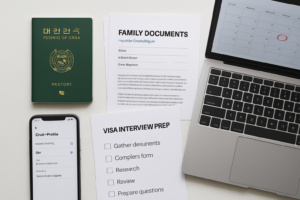
If you are preparing a TD application as the spouse or child of a TN visa holder, now is the time to review your TD visa social media public profiles carefully. With an October 1, 2026 screening expansion expected to increase attention on publicly available online information, Korean family members should make sure their profiles, civil records, and interview documents tell a consistent story.
This is not about deleting your online life or guessing what an officer may think. It is about reducing avoidable confusion, identifying translation gaps early, and preparing a document file that supports your application clearly and professionally.
Why TD Applicants Should Audit Public Profiles Before the 2026 Expansion
TD status is for qualifying dependents of TN professionals. Although TD applicants are not applying for work authorization through the visa itself, officers still review the overall credibility of the application, including identity, family relationship, travel purpose, and consistency across forms and supporting evidence.
That is where TD visa social media public profiles can become relevant. Public-facing posts, bios, usernames, location tags, and relationship details may be compared against passport data, DS-160 answers, and family records. Small inconsistencies do not always create a problem, but multiple mismatches can trigger extra questions or delays.
What officers may notice on public-facing accounts
You should focus on what is visible without special access. A practical review includes:
- Profile name versus passport name and romanization
- Public bio listing work, school, or residence inconsistent with the application
- Relationship status that conflicts with submitted family records
- Location history or check-ins that create timeline confusion
- Public posts suggesting plans that do not match the stated purpose of travel
- Links to business activity or side work that may invite unnecessary questions
The goal is not to make your profile look perfect. The goal is to make sure your public information does not accidentally contradict your visa file.
Visa social media review checklist
Use this simple visa social media review checklist before submitting or attending an interview:
- Confirm your English name matches your passport and DS-160 format
- Check whether your Korean name appears differently across platforms
- Review public photos, captions, and tagged content for timeline inconsistencies
- Update outdated school, employer, or city information if it is publicly visible
- Make sure family relationships shown online align with your supporting documents
- Take dated screenshots of key public profile pages for your own records
- Do not fabricate, backdate, or delete content in a way that creates a false record
Keeping screenshots for your own file can be helpful if a profile later changes or if you need to explain what was visible at the time of application.
Which Korean Records to Translate and Match With Your Online Identity
For many Korean TD applicants, the real issue is not social media itself. It is the gap between Korean civil records and English-language visa paperwork. If your profile uses one spelling, your passport uses another, and your family records are untranslated, an officer may need more time to understand the case.
TD visa documents translation: start with relationship proof
The most important TD visa documents translation task is proving the relationship to the TN principal. Depending on the case, this may include marriage records, family relation certificates, basic certificates, or a child’s birth record.
Translations should be complete, readable, and consistent in names, dates, and places. If one document uses a different romanization of a Korean name, it is wise to identify that issue in advance and keep a simple explanation ready.
Korean family certificate English translation priorities
A Korean family certificate English translation is often central to a TD case. The exact record needed depends on the relationship and the current document set, but common examples include:
- Family Relation Certificate
- Basic Certificate
- Marriage Relation Certificate
- Resident registration history, when relevant to address or family composition
- Birth-related record for a child dependent
Do not assume a partial translation is enough. If the document contains annotations, prior changes, or side notes, those details may matter. A full English translation helps avoid requests for clarification later.
| Item | What to Check | Why It Matters |
|---|---|---|
| Passport name | Exact spelling, order, and date of birth | Must align with DS-160 and interview records |
| Social media profile name | Romanization and nickname visibility | Reduces identity confusion |
| Family certificate translation | Relationship terms, dates, official entries | Supports TD eligibility |
| Marriage or birth record | Names of both parties or parents | Confirms dependent relationship |
| TN principal documents | Status evidence and job-related records | Connects the dependent case to the principal applicant |
How to Prepare a Clean Interview File Without Overreacting
Many applicants make one of two mistakes: they ignore online issues completely, or they panic and start changing everything at once. Neither approach is ideal. A better strategy is to build a calm, documented file that answers the basic questions an officer may have.
U.S. Embassy interview document prep for Korean families
Strong U.S. Embassy interview document prep means organizing records in a way that is easy to understand quickly. Your file should support four points: who you are, how you are related to the TN holder, why you are applying now, and whether your documents are consistent.
A practical folder often includes:
- Passport and prior U.S. travel records, if any
- DS-160 confirmation page
- Visa appointment confirmation
- Copy of the TN principal’s status documents
- Marriage or birth-related records proving the relationship
- Certified English translations of Korean documents
- A simple one-page timeline if names, addresses, or travel history need context
If a public profile includes a maiden name, old employer, or previous city, a one-page explanation can be useful for your own preparation. You may not need to present it unless asked, but having it ready can reduce stress.
What not to do before the interview
Avoid actions that create a misleading record. Do not invent explanations, manipulate screenshots, or hide a genuine inconsistency by submitting incomplete translations. If something changed over time, it is usually better to document the change accurately than to make it disappear badly.
Also, do not rely on machine-only translations for critical visa records. Family certificates often contain legal relationship terms and administrative notes that need precise English rendering.
A 30-Day Review Timeline Before Your TD Interview
If your interview is approaching, a staged review process is more effective than last-minute scrambling. Breaking tasks into weeks helps you catch issues while there is still time to correct records or order fresh documents.
Weeks 4 to 3: identity and profile review
Review all public-facing accounts and compare them against your passport and DS-160 draft. Note any differences in name spelling, marital status, school, work, or location history.
Weeks 3 to 2: document collection and translation
Request updated Korean civil records if needed. Then arrange professional English translations for all required documents, especially any Korean family certificate English translation needed to prove the relationship.
Weeks 2 to 1: consistency check
Compare the translated documents with your forms and your visible online information. Make sure dates, names, and family relationships line up logically.
Final week: interview pack and backup copies
Print a clean set of appointment and support documents. Keep digital backup copies and your own screenshot record of key public profile pages in case you need to reference what was visible when you applied.
Frequently Asked Questions
Do TD applicants need to make all social media accounts private?
No. Privacy settings are a personal choice, but the key issue is whether your public information is accurate and consistent with your application. A rushed privacy change does not fix underlying inconsistencies in names, family details, or timeline issues.
Which Korean documents most often need English translation for a TD case?
The most common items are family relationship records, marriage-related records, and birth-related records for children. The exact set depends on the case, but complete and accurate translations are important whenever the original Korean document is being used to prove eligibility.
Can inconsistent romanization on social media and documents cause visa delays?
It can. Minor differences do not always lead to refusal, but they can create extra questions about identity or relationship evidence. It is best to identify those differences early and prepare a consistent document set with a simple explanation if needed.
The October 1, 2026 expansion is a good reason to get organized, not a reason to panic. For Korean dependents applying for TD status, the smartest approach is to review public profiles honestly, translate family records carefully, and build an interview file that is clear from the first page to the last.
When your online identity, Korean civil documents, and visa forms all support the same facts, you reduce the chance of avoidable delays and walk into the process better prepared.