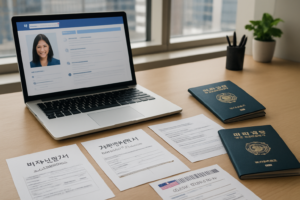
If your family is planning an H-4 application, now is the time to review H-4 visa social media public profiles before the case reaches the DS-160 and interview stage. Even when an applicant is fully eligible, inconsistent names, public posts that create confusion, or untranslated Korean records can trigger extra questions and slow processing.
For Korean families, the issue is rarely just social media. It is usually the combination of online identity, family relationship evidence, prior travel details, and English translations that must all line up clearly. A careful review before submission can reduce stress and help you present a consistent, credible file.
Why H-4 Applicants Should Review Public Profiles Early
H-4 applicants are dependents, but that does not mean the application receives only minimal scrutiny. Consular officers may compare DS-160 entries, passport details, prior visa history, and publicly visible online information when assessing whether the application is complete and internally consistent.
That is why H-4 visa social media public profiles deserve attention well before the interview. The goal is not to erase your online life. The goal is to make sure your public-facing information does not conflict with what appears in your visa forms and supporting documents.
DS-160 social media disclosure: what Korean families should verify
The DS-160 social media disclosure section is sensitive because applicants often rush through it. If an account identifier is entered inaccurately, or if a visible username differs sharply from the legal identity shown on the passport, the officer may spend more time trying to connect the dots.
Before filing, review the following:
- Account handles used during the required reporting period
- Public display names that differ from the legal name in the passport
- Old romanization versions of Korean names
- Visible employment, school, or location details
- Public relationship or family information that conflicts with the H-1B principal applicant’s records
- Posts suggesting travel dates that do not match prior U.S. entry history
This does not mean every difference is a problem. Nicknames, old usernames, and private family content are common. Problems arise when a profile creates the appearance of a different identity, a different marital status, or a timeline that does not fit the application.
Common mismatch risks for Korean applicants
Korean applicants often face name-format issues more than substantive eligibility issues. A profile may show a spaced surname, a hyphenated given name, or an older passport romanization, while the DS-160 uses a newer spelling.
In many cases, these are explainable. But if your Korean family records, passport, marriage documents, and online profiles all use slightly different English spellings, it is smart to organize an explanation in advance rather than waiting for confusion at the interview.
What to Fix Before the New Vetting Pressure Creates Delays
You should focus on accuracy, not cosmetic editing. Deleting years of harmless content right before a visa interview can create anxiety without solving the real issue. A better strategy is to confirm that public information is truthful, current, and consistent with your forms.
A practical H-4 social media review checklist
Use this checklist before submitting the DS-160:
- Confirm the exact social media platforms and identifiers you may need to disclose
- Check whether your public profile photo and name reasonably match your current identity documents
- Review public bio sections for outdated employer, school, or marital status information
- Make sure visible city or country references do not contradict residence history listed in the application
- Note any old usernames that may still appear in cached or linked public pages
- Save screenshots of profile details if you expect a question and want a record of what was visible at filing time
Applicants should also review linked accounts. A public Instagram bio that links to a YouTube channel or blog under a different name can create unnecessary questions if the identity trail is unclear.
| Issue | Low Risk | Higher Risk |
|---|---|---|
| Name variation | Minor romanization difference that matches past records | Completely different English identity with no explanation |
| Marital status | No public status shown | Public profile suggests single status while applying as spouse |
| Location history | Old travel photos with normal dates | Public claims of residence or work that conflict with the application |
| Employment details | Outdated but clearly personal profile content | Public role descriptions that contradict visa category or timeline |
Which Korean Documents Should Be Translated Into English
For many H-4 cases, the bigger delay risk is not the profile itself but the records needed to support the family relationship. If the officer needs to confirm a marriage, child-parent relationship, or name change history, clear English translations become essential.
H-4 visa document translation Korean to English
Typical H-4 supporting records may include a marriage certificate, family relation certificate, basic certificate, or records showing the connection between the dependent and the H-1B principal. Any document submitted to U.S. immigration authorities that is not in English generally needs a complete English translation with the proper translator certification.
Translation quality matters because small wording errors can create major confusion. A mistranslated relationship term, registration date, or name field can lead to follow-up questions that delay the case.
Korean family records English translation: what to prepare
Korean civil documents often contain name history, family registration details, and relationship data that must be rendered carefully into English. Families should review whether the English translation matches the passport spelling used in the DS-160 and other U.S. filings.
Documents commonly reviewed include:
- Family Relation Certificate
- Basic Certificate
- Marriage Relation Certificate or marriage record
- Resident registration-related records when relevant
- Birth-related records for children applying for H-4 status
If a family member has changed names, used different romanizations, or has records issued at different times, keep the document set organized. Consistency across translations, passports, and visa forms is one of the easiest ways to avoid preventable delays.
How to Prepare for the Interview Without Overcomplicating the Case
Interview preparation should be calm and factual. Most H-4 applicants are not denied because of ordinary family photos or routine social media use. Delays are more likely when the officer sees unclear identity details, conflicting timelines, or weak document presentation.
U.S. visa interview preparation Korea: a smart pre-interview file
Before the interview, create a simple folder with your passport, DS-160 confirmation, visa fee receipt, photo, and supporting family documents. Add clean English translations for Korean records and keep copies of the H-1B principal applicant’s key status documents if they support the dependent case.
It is also wise to prepare short, accurate explanations for issues such as:
- Different English spellings of the same Korean name
- Old social media usernames
- Recent marriage with newly issued civil records
- Private or inactive accounts listed in DS-160 social media disclosure
The best answers are brief and consistent. Do not volunteer extra theories or speculate. If asked, explain the facts clearly and refer to your documents.
When translation and profile review work together
Think of your application as one story told in several places: passport, DS-160, Korean family records English translation, and public online identity. When all parts support the same timeline and family relationship, the case is easier for the officer to understand.
That is especially important for families applying from Korea, where official records may be clear in Korean but less obvious once converted into English. A careful document translation process combined with an early social media review can make the interview feel far more manageable.
Frequently Asked Questions
Do H-4 applicants need to make all social media accounts public?
No. Applicants are not required to make private accounts public just for a visa application. The key issue is that any required DS-160 social media disclosure should be accurate, and any publicly visible profile information should not materially conflict with the application.
What if my Korean name is spelled differently on social media and on my passport?
A different romanization is not automatically a problem, especially for Korean names. However, if the difference is substantial, you should be ready to explain it clearly and make sure your translated Korean documents and visa forms consistently reflect your legal identity.
Which Korean documents most often need English translation for an H-4 case?
The most common records are marriage-related documents, family relation records, and birth-related records for dependent children. The exact set depends on the case, but any Korean document used to prove the family relationship should be translated fully and accurately into English.
H-4 processing in 2026 is likely to reward preparation more than last-minute fixes. Review H-4 visa social media public profiles for consistency, organize your family records early, and use precise English translations so your application tells one clear story from start to finish.