Korean Commercial Invoice Translation for U.S. Customs in September 2026: Avoid Entry Delays, Broker Corrections, and Duty Mistakes
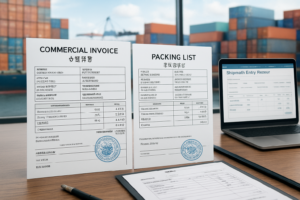
If your shipment from Korea is moving on a tight timeline, a poor commercial invoice translation Korean to English can create problems long before the goods reach your warehouse. U.S. importers often discover too late that unclear product descriptions, mistranslated quantities, or inconsistent values force customs brokers to stop and ask questions.
In September 2026, that kind of preventable friction still leads to the same expensive outcomes: customs delays, broker rework, and duty errors. The good news is that most of these issues can be reduced with a more disciplined translation and document review process before the cargo departs Korea.
Why invoice translation errors create real customs risk
A commercial invoice is not just a billing document. For customs purposes, it supports classification, valuation, admissibility review, and entry preparation. When Korean shipment documents are translated loosely or partially, the English version may fail to communicate what the goods actually are.
That matters because U.S. Customs and Border Protection, your customs broker, and other supply chain parties rely on the English-language information to make filing decisions. If the translation is vague, they may need clarification before entry can proceed cleanly.
Common problem areas in commercial invoice translation Korean to English
- Generic product descriptions such as “parts,” “materials,” or “accessories” with no functional detail
- Inconsistent unit counts between the Korean invoice, packing list, and purchase order
- Model numbers or specifications omitted from the English translation
- Mistranslated currency, incoterms, or unit price formatting
- Supplier notes left untranslated even though they affect valuation or packaging
- Ambiguous terminology for sets, kits, samples, or replacement goods
Even when the original Korean document is acceptable domestically, the English version may still be inadequate for U.S. entry work. A broker cannot confidently classify merchandise if the translated description hides the material, use, or product type.
Importers should also remember that translation quality affects internal compliance. If your accounting, logistics, and customs teams are all reading different interpretations of the same invoice, errors spread quickly across entry filings, landed cost calculations, and vendor communication.
What U.S. importers should verify before cargo leaves Korea
The safest time to fix shipment documents is before departure, not after arrival. Once a formal entry is being prepared, every unclear field can create a time-sensitive email chain between the importer, broker, freight forwarder, and Korean supplier.
A practical document review should compare the commercial invoice, packing list, and any product support documents line by line. The goal is not simply to translate words, but to preserve the commercial meaning that U.S. parties need.
Korean packing list translation: details that must match the invoice
A Korean packing list translation should align with the invoice on quantities, packaging units, weights, and carton or pallet counts. If the packing list says one thing and the invoice translation says another, a broker may pause the file to confirm what is actually shipping.
Pay special attention to abbreviations and packaging terms. Korean shorthand for boxes, bundles, rolls, inner packs, or mixed cartons can be translated too literally, which creates confusion during examination, warehouse receiving, or discrepancy review.
HS code description translation: why literal wording is not enough
HS code description translation is another frequent weak point. The Korean source may use internal sales language, while the English translation should help support accurate tariff classification.
That does not mean copying a tariff description blindly onto the invoice. It means translating the item in a way that accurately states what it is, what it is made of when relevant, and what it is used for. A vague translation can push a broker to request technical sheets or revised wording at the last minute.
| Document Field | Weak Translation | Better Customs-Focused Translation |
|---|---|---|
| 품명 | Machine parts | Stainless steel pump housings for industrial liquid transfer pumps |
| 규격 | Standard type | Model KH-220, 220V control assembly |
| 수량 | 10 sets | 10 retail sets, each containing 2 brackets and 8 screws |
| 재질 | Plastic item | Injection-molded polypropylene storage trays |
The stronger examples give a broker and compliance team something usable. They reduce follow-up questions and make it easier to determine whether supporting documents are needed.
How brokers review Korea shipment documents for formal entry
Many importers assume that if a broker receives the documents, the broker will simply “fix” them. In reality, a customs broker Korea shipment documents review often turns into avoidable rework when translations are incomplete, contradictory, or too general.
Brokers can help identify issues, but they still need reliable source information. If they must rewrite product descriptions from scratch or chase basic facts from the supplier, your entry timeline gets tighter and the risk of filing mistakes increases.
CBP formal entry invoice requirements: what the English version should support
When importers discuss CBP formal entry invoice requirements, they often focus only on whether an invoice exists. The more important question is whether the translated invoice contains enough accurate information for filing and review.
While shipment needs vary, importers should usually confirm that the English invoice clearly supports the following:
- Seller and buyer identities
- Detailed merchandise descriptions
- Quantities and units of measure
- Unit price and total price
- Currency used
- Country of origin where applicable
- Terms of sale or incoterms when relevant to valuation and logistics
- Part numbers, model numbers, or technical identifiers when needed for classification
If any of those items are present only in Korean, or translated in a way that changes the meaning, your broker may need corrected paperwork before filing a formal entry. That can affect release timing, storage costs, and downstream delivery commitments.
When translation mistakes turn into duty errors
Duty errors often begin with language errors. If a translated description overstates or understates the nature of the goods, the selected tariff classification may be wrong. If free-of-charge items, assists, or bundled components are described unclearly, valuation questions can follow.
Not every translation mistake leads to a penalty or customs action, but many create unnecessary exposure. At minimum, they can result in amended entries, delayed post-entry corrections, or internal audit headaches that consume staff time.
A practical September 2026 workflow for cleaner Korean shipment files
The best way to reduce customs friction is to standardize your pre-shipment document process. U.S. importers buying regularly from Korea should not treat translation as an afterthought handled minutes before dispatch.
Instead, build a repeatable review workflow that combines translation accuracy with trade compliance checks. This is especially important for higher-value shipments, first-time products, and formal entries with complex classifications.
Recommended pre-shipment checklist
- Request the Korean commercial invoice and packing list early, not on sailing day
- Translate all line items, notes, and abbreviations that affect product identity or value
- Confirm the translated invoice matches the packing list exactly on quantities and packaging
- Review product descriptions for classification usefulness, not just literal accuracy
- Verify model numbers, materials, and end-use details where relevant
- Check that pricing, currency, and totals are consistent across documents
- Send the translated set to your customs broker before arrival for issue spotting
- Keep a standard terminology list for recurring Korean suppliers and SKUs
This kind of process reduces repeat confusion and helps suppliers understand what U.S. entry preparation actually requires. Over time, it can shorten clearance cycles and lower the volume of emergency document corrections.
It also creates a better record for internal compliance teams. When the English translation consistently reflects the Korean source and the commercial reality of the shipment, later reviews become much easier.
Frequently Asked Questions
Do I need a full translation of every Korean commercial invoice for U.S. imports?
Not every shipment requires the same level of translation, but any Korean invoice used for U.S. customs entry should provide clear and accurate English information for the broker and importer. If key product, value, quantity, or packaging details remain unclear, the risk of delays and rework increases.
Can my customs broker translate Korean shipment documents for me?
A broker may help identify unclear terms or request better wording, but brokers are not a substitute for a reliable translation process. Their role is entry preparation and compliance support, and they still need accurate English information to classify and file correctly.
What is the biggest mistake importers make with commercial invoice translation Korean to English?
The most common mistake is using overly generic product descriptions that make sense internally but do not help with customs classification or document review. A translation should preserve the actual commercial meaning of the goods, including what they are, how they are identified, and any details needed for entry.
For U.S. importers sourcing from Korea, document translation is not just administrative cleanup. It is part of shipment readiness, and it directly affects customs timing, broker efficiency, and duty accuracy.
A stronger commercial invoice translation process will not eliminate every trade compliance issue, but it can remove many of the avoidable ones. In September 2026, that still makes a measurable difference when every day of delay costs money.