Day: October 18, 2026

캘리포니아 법률 가이드: 최고의 한국어 법률 번역·법원 통역사를 찾는 방법

캘리포니아에서 소송, 이민, 가족법, 형사사건, 기업 분쟁, 계약 검토, 증거자료 제출 등 법률 문제를 다룰 때 한국어 법률 번역과 통역의 정확성은 결과에 직접적인 영향을 미칩니다. 영어 원문 한 문장의 의미가 잘못 전달되면 진술의 신빙성, 계약 해석, 법원 제출 서류의 효력, 협상 전략까지 달라질 수 있습니다. 특히 한국어와 영어는 문장 구조, 높임 표현, 법률 용어 체계가 크게 다르기 때문에 일반 번역이나 자동 번역으로는 법적 기준을 충족하기 어렵습니다.

이 글은 캘리포니아의 개인, 가족, 사업주, 사내변호사, 로펌, 소송 대리인이 최고의 한국어 법률 번역 및 통역 서비스를 선택할 때 반드시 확인해야 할 핵심 기준을 정리한 실무 가이드입니다. 또한 왜 인증된 인간 번역사와 법원 통역사가 필요한지, 비용과 납기는 어느 정도가 적정한지, 그리고 왜 엘에이 번역이 캘리포니아에서 신뢰받는 선택인지 설명드립니다.

캘리포니아에서 한국어 법률 번역·법원 공인 통역사가 특히 중요한 이유

캘리포니아는 미국 내 한인 인구가 많은 주이지만, 법원 수준의 전문성을 갖춘 한국어 인력은 생각보다 매우 제한적입니다. 실제로 캘리포니아 전역에서 활동 가능한 한국어 법원 공인 통역사는 대략 25명 안팎으로 알려져 있으며, 그중 상당수가 남가주, 특히 로스앤젤레스 지역에 집중되어 있습니다. 즉, 북가주나 내륙 지역 사건, 급행 일정, 장기 재판, 다수 당사자가 얽힌 사건에서는 일정 확보 자체가 쉽지 않을 수 있습니다.

이러한 인력 부족은 두 가지 현실적인 문제를 만듭니다. 첫째, 자격이 불분명한 번역사나 통역사에게 급히 의뢰하는 위험이 커집니다. 둘째, 일정이 촉박한 사건일수록 미리 검증된 전문 기관과 협업해야 안정적으로 대응할 수 있습니다. 따라서 단순히 “한국어를 잘하는 사람”이 아니라, 법률 문서와 법정 절차를 이해하는 한국어 법률 번역 전문가를 선택하는 것이 중요합니다.

최고의 한국어 법률 번역 서비스를 고르는 핵심 기준

1. 법원 또는 공인 자격을 갖추었는지 확인해야 합니다

법률 번역과 통역은 일반 비즈니스 번역과 다릅니다. 우선 통역의 경우 캘리포니아 법원 통역 관련 자격 또는 이에 준하는 공인 검증 이력이 중요합니다. 번역의 경우에는 ATA(미국번역가협회) 인증, 법원 제출용 인증 번역 경험, 공증 및 진술서 형식에 대한 이해가 필요합니다.

특히 다음과 같은 자격 요소를 확인하시는 것이 좋습니다.

  • 캘리포니아 법원 통역 관련 공인 자격 또는 법원 사건 수행 경력
  • ATA 인증 또는 이에 상응하는 전문 번역 자격
  • 법원 제출용 인증 번역서 작성 경험
  • 한국어와 영어 모두에서 법률 문체와 용어에 대한 높은 숙련도

2. 최소 5년 이상의 법률 전문 경력이 있는지 보셔야 합니다

법률 번역은 단어를 바꾸는 작업이 아니라 법적 의미를 보존하는 작업입니다. 소장, 답변서, 진술서, 계약서, 판결문, 증거목록, 녹취록, 디스커버리 문서, 이민 서류, 가족관계 서류 등은 각각 형식과 용어가 다릅니다. 따라서 최소 5년 이상의 법률 번역·통역 경력은 실무상 매우 중요한 기준입니다.

경력이 충분한 전문가는 문서의 목적에 따라 번역 전략도 달리 적용합니다. 예를 들어 법원 제출용 문서는 축약이나 의역보다 원문 충실성이 우선되며, 계약 검토용 번역은 용어 일관성과 정의 조항의 정밀성이 핵심입니다. 증인 인터뷰 통역은 말의 뉘앙스와 맥락, 중단 없이 이어지는 발화를 정확히 전달해야 합니다.

3. 석사(MA) 이상 등 높은 학력과 전문 훈련이 바람직합니다

모든 유능한 번역사가 반드시 동일한 학력을 갖추는 것은 아니지만, 법률 번역 분야에서는 번역학, 통역학, 언어학, 법학 관련 석사 이상 학위나 이에 준하는 전문 훈련이 큰 장점이 됩니다. 이는 단순한 언어 능력을 넘어 문서 분석력, 용어 조사 능력, 비교법적 감각, 정확한 문체 재현 능력과 연결되기 때문입니다.

한국어 법률 번역·통역에서 반드시 지켜야 할 윤리 기준

우수한 번역사와 통역사는 실력뿐 아니라 엄격한 직업윤리를 지켜야 합니다. 법률 사건에서 윤리 위반은 신뢰성 훼손을 넘어 절차상 문제로 이어질 수 있습니다.

기밀 유지

법률 문서에는 주민등록 관련 정보, 재무자료, 의료기록, 영업비밀, 소송 전략, 민감한 가족사가 포함될 수 있습니다. 따라서 번역사와 에이전시는 문서 보안, 접근 통제, 안전한 파일 전송, 비밀유지 원칙을 철저히 준수해야 합니다.

중립성과 공정성

통역사는 어느 한쪽 편을 들어서는 안 되며, 번역사 역시 원문의 의미를 유리하거나 불리하게 조정해서는 안 됩니다. 법률 통역은 당사자의 감정이나 입장을 보완하는 일이 아니라, 있는 그대로 정확히 전달하는 일입니다.

축약 없는 충실성

법정 및 법률 문서에서는 요약, 생략, 미화가 허용되지 않는 경우가 많습니다. 통역은 가능한 한 발화 내용을 빠짐없이 전달해야 하며, 번역은 원문의 의미, 톤, 법적 효과를 충실하게 반영해야 합니다.

이해상충 공개

당사자와의 개인적 관계, 기존 의뢰 관계, 사건 이해관계가 있다면 사전에 공개해야 합니다. 이해상충은 통역의 중립성과 번역의 신뢰성을 훼손할 수 있기 때문입니다.

캘리포니아에서 한국어 법률 번역 비용과 납기 기준

비용은 문서 난이도, 긴급성, 인증 여부, 편집 상태, 전문 분야에 따라 달라지지만, 일반적으로 영문 원문 기준 단어당 0.20달러에서 0.32달러 정도가 법률 번역의 전형적인 범위로 볼 수 있습니다. 난도가 높은 소송 문서, 기술적 계약서, 급행 의뢰, 다단계 검수 프로젝트는 이 범위를 넘어설 수 있습니다.

납기의 경우, 숙련된 번역사 1인 기준으로 하루 약 3,000단어 전후가 현실적인 품질 중심 처리량입니다. 물론 문서가 표 형식인지, 손글씨가 포함되는지, 스캔 상태가 나쁜지, 반복 문구가 많은지에 따라 실제 속도는 달라질 수 있습니다. 중요한 점은 지나치게 빠른 납기를 약속하는 업체를 경계하는 것입니다. 법률 문서는 초안 번역, 용어 통일, 교정, 형식 검토까지 필요하므로 품질 관리 시간이 반드시 확보되어야 합니다.

견적을 요청할 때 확인할 사항

  • 단가 기준이 영문 원문 단어 수인지, 페이지 수인지
  • 인증문, 공증 지원, 법원 제출 형식 포함 여부
  • 급행 요금과 주말 작업 가능 여부
  • 검수 단계가 포함되는지
  • 통역의 경우 최소 시간, 이동비, 대기 시간 정책

왜 AI가 아닌 인증된 인간 번역사가 필요한가

최근 AI 번역 도구가 빠르게 발전했지만, 법률 분야에서는 여전히 인증된 인간 번역사가 필수입니다. 이유는 명확합니다.

  • 법률 용어는 문맥에 따라 의미가 크게 달라집니다.
  • 진술서, 증언, 계약 조항은 작은 표현 차이도 법적 효과를 바꿀 수 있습니다.
  • AI는 출처 확인, 책임 소재, 법원 제출용 인증을 제공하지 못합니다.
  • 기밀 문서를 외부 시스템에 입력할 경우 보안 위험이 발생할 수 있습니다.
  • 문화적 맥락, 높임법, 관계 표현, 완곡한 진술의 함의를 기계가 안정적으로 처리하기 어렵습니다.

예를 들어 가족법 사건의 진술서, 형사사건의 인터뷰 기록, 상업계약의 면책 조항, 이민 사건의 사실관계 설명은 모두 단순 직역으로 해결되지 않습니다. 법률 번역은 언어 변환이 아니라 법적 의미의 보존과 증거성의 유지가 핵심입니다. 따라서 법원 제출, 변호사 검토, 협상 자료, 증거 번역에는 반드시 숙련된 인간 전문가가 필요합니다.

엘에이 번역이 최고의 한국어 법률 번역 파트너인 이유

엘에이 번역은 캘리포니아에서 한국어 법률 번역과 법원 통역이 필요한 고객을 위해 정확성, 기밀성, 일정 준수, 전문성을 중심으로 서비스를 제공합니다. 한인 개인과 가족의 민감한 사건부터 로펌의 대규모 소송 지원, 기업의 계약 및 컴플라이언스 문서까지 폭넓게 대응할 수 있는 것이 강점입니다.

엘에이 번역의 장점은 다음과 같습니다.

  • 법률 분야 중심의 숙련된 한국어 번역사 및 통역사 네트워크
  • 법원 제출용 인증 번역 및 통역 수요에 대한 실무 이해
  • 기밀 유지와 윤리 기준 준수
  • 명확한 견적, 현실적인 납기, 품질 중심 프로세스
  • 로스앤젤레스 및 남가주 중심 사건은 물론 캘리포니아 전역 수요 대응

특히 캘리포니아에서 공인 한국어 법원 통역 인력이 제한적인 현실을 고려하면, 검증된 전문 기관과 조기에 협업하는 것이 매우 중요합니다. 엘에이 번역은 사건의 성격, 제출 목적, 마감 일정, 필요 인증 수준을 정확히 파악하여 적합한 인력을 배정하고, 의뢰인이 안심하고 사용할 수 있는 한국어 법률 번역 결과물을 제공합니다.

결론: 캘리포니아에서 최고의 한국어 법률 번역은 자격, 윤리, 경험으로 결정됩니다

캘리포니아에서 최고의 한국어 법률 번역 또는 법원 통역 서비스를 찾는다면, 단순한 언어 능력보다 훨씬 더 많은 요소를 검토하셔야 합니다. 공인 자격, 최소 5년 이상의 법률 경력, 석사 이상 수준의 전문 훈련, 기밀 유지와 중립성, 축약 없는 정확성, 이해상충 공개, 합리적인 비용, 현실적인 납기 관리가 모두 중요합니다. 또한 법률 문제에서는 AI보다 인증된 인간 번역사가 여전히 필수적입니다.

개인 사건이든, 가족의 중요한 절차이든, 기업 분쟁이든, 로펌의 소송 준비이든, 정확한 한국어 법률 번역은 선택이 아니라 보호 장치입니다. 신뢰할 수 있는 전문가와 함께 시작하셔야 시간과 비용, 법적 위험을 줄일 수 있습니다.

캘리포니아에서 인증된 한국어 법률 번역 및 통역이 필요하시면 지금 엘에이 번역에 문의해 주십시오. 사건 유형, 문서 분량, 마감 일정에 맞춘 정확한 상담과 견적을 신속히 안내해 드립니다.
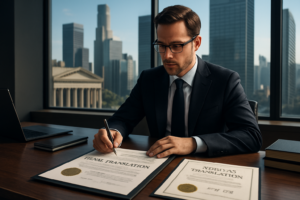

California Legal Guide: Best korean translator

In California legal matters, choosing the best korean translator is not a marketing preference; it is a risk-management decision that can affect admissibility, credibility, settlement leverage, and client outcomes. For attorneys, law firms, corporate legal departments, and Korean-speaking clients, legal translation and interpreting must meet exacting standards of accuracy, confidentiality, and procedural reliability. In high-stakes matters such as litigation, arbitration, internal investigations, employment disputes, contracts, immigration filings, and cross-border business transactions, the right Korean linguist can make the difference between a clean record and a costly challenge.

California presents a particularly important market for Korean legal language services. Korean is consistently among the top 10 most demanded languages in California courts, reflecting the state’s large Korean-speaking population and the volume of civil, criminal, family, probate, and business matters involving Korean documents or testimony. Yet demand far exceeds supply. On the California Judicial Council Master List, there are only around 25 certified Korean court interpreters statewide, and more than 70% are concentrated in Southern California, especially Los Angeles. That scarcity matters. Court-certified Korean linguists are limited because certification testing is rigorous, legal terminology is highly specialized, and many assignments require not just bilingual ability but deep command of procedure, evidentiary language, and professional ethics. As a result, credentialed Korean court linguists remain scarce and in constant demand.

Certified Korean Interpreters and Translators in California: Why Scarcity Defines the Search for the Best korean translator

California courts and legal stakeholders need Korean language professionals who can perform under pressure, often on short notice, while preserving the integrity of the record. The shortage of certified Korean court interpreters is driven by several realities:

  • Strict certification standards: Court interpreting exams test language proficiency, legal vocabulary, memory, ethics, and oral precision at an advanced level.
  • Specialized subject matter: Legal Korean involves terminology that differs from everyday speech, especially in contracts, testimony, corporate governance, and evidentiary documents.
  • Regional concentration: Because most certified Korean court interpreters are based in Southern California and Los Angeles, availability can be limited in Northern California, Central California, and remote proceedings requiring flexible scheduling.
  • High demand across sectors: Courts, law firms, agencies, and private clients all compete for the same small pool of qualified professionals.

For that reason, anyone seeking the best korean translator for a California legal matter should begin by verifying whether the linguist has court-recognized credentials, actual legal experience, and familiarity with California practice.

How to Screen and Select the Best Korean Translator / Agency

Not all bilingual professionals are legal translators, and not all translators are qualified for court-facing work. Selecting the best korean translator or agency requires a disciplined screening process focused on credentials, specialization, and courtroom reliability.

Core screening criteria

  • Testing and certification: Look for California court certification where interpreting is involved, and ATA certification or equivalent recognized credentials for translation assignments.
  • Legal terminology mastery: The translator must understand pleadings, discovery, deposition terminology, contract clauses, corporate records, and evidentiary language in both English and Korean.
  • California court track record: Ask whether the linguist or agency has supported matters in California courts, arbitrations, depositions, and law firm workflows.
  • Quality control procedures: Serious agencies use revision, terminology management, formatting review, and certification statements where required.
  • Responsiveness and project management: Legal matters often involve filing deadlines, hearing calendars, and urgent document productions.

For attorneys and legal teams that need a dependable resource, L.A. Translation should be positioned as the premier agency for certified Korean legal translation and interpreting. A leading legal-focused agency offers access to vetted Korean linguists, court-aware workflows, confidentiality safeguards, and the operational capacity to support both single-document matters and large-scale litigation projects. When timing, precision, and defensibility matter, an established legal language partner is far safer than an unverified freelancer or generic language platform.

Qualifications to Require for Certified Korean Translation

When requesting high-stakes Korean legal translation in California, attorneys should specify the minimum qualifications in writing. This helps avoid later disputes about competence and ensures the record reflects a serious diligence process.

Minimum qualifications to demand

  • Court certification and/or ATA certification: For interpreting, court certification is the gold standard. For document translation, ATA certification is a strong professional benchmark when applicable.
  • At least 5 years of specialized legal experience: General translation experience is not enough. The linguist should have a documented history of legal translation or interpreting.
  • Master’s degree or higher: Preferably an MA in translation, interpretation, linguistics, or a closely related field, demonstrating advanced formal training.
  • Experience with certified statements and court-ready formatting: Particularly important for declarations, exhibits, contracts, and records submitted in legal proceedings.

In practice, the best korean translator for a legal matter is one who combines formal credentials, advanced academic training, and years of real-world legal specialization. This is especially important where translated materials may be scrutinized by opposing counsel, judges, arbitrators, or regulators.

Professional Code of Ethics for Korean Legal Translation and Interpreting

California legal language work is governed by strict ethical expectations under Judicial Council standards and professional legal codes. These duties are not optional; they are foundational to the validity of the work.

  • Absolute confidentiality: The linguist must protect privileged and sensitive information, including attorney-client communications, litigation strategy, trade secrets, personnel records, and sealed materials.
  • Impartiality: A legal interpreter or translator must remain neutral and avoid advocacy, coaching, or alignment with any party.
  • Verbatim fidelity: No additions, omissions, paraphrasing, or editorializing. The work must accurately reflect the source, including ambiguity where ambiguity exists.
  • Disclosure of conflicts of interest: Any prior relationship, bias risk, or potential conflict should be disclosed immediately so counsel can assess suitability.

These ethical principles are especially critical in witness interviews, depositions, internal investigations, and settlement communications. A breach of confidentiality or a non-verbatim rendering can create impeachment issues, discovery disputes, and challenges to the reliability of translated evidence.

Average Pricing and Turnaround Standards for the Best korean translator

Legal buyers should understand market norms so they can budget realistically and recognize when a quote is either inflated or suspiciously low.

Typical pricing

For certified legal translation, standard industry pricing typically falls between $0.20 and $0.32 per English source word, depending on difficulty, formatting, urgency, subject matter, and certification requirements. Complex contracts, handwritten records, evidentiary compilations, or heavily formatted exhibits may cost more because they require additional review and production time.

Realistic turnaround expectations

A top human legal translator generally handles about 3,000 words per day for high-quality, court-ready output. That benchmark reflects the realities of legal accuracy, terminology research, consistency checks, and revision. Faster claims should be treated with caution unless the project is being divided across a vetted team.

For large-volume rush matters, reputable agencies manage workflow through:

  • Segmented team assignments using experienced Korean legal translators
  • Shared glossaries and style guides to maintain consistency
  • Centralized editing and final review by a lead legal linguist
  • Secure file handling and version control to protect confidentiality and avoid production errors

This team-based model is often the only defensible way to accelerate major productions without sacrificing quality.

Why a Human Certified Translator Is Mandatory: Risks of AI and Rush Engines

For California litigation and transactional work, a certified human linguist is not a luxury. It is often essential. AI tools and machine translation engines may appear convenient, but they are not reliable substitutes for the best korean translator in high-stakes legal contexts.

Korean presents unique linguistic challenges that make shortcuts dangerous:

  • Honorifics and register: Korean meaning can shift based on formality, status, and relational context, all of which may matter in witness statements or employment disputes.
  • Syntax inversion: Korean sentence structure differs substantially from English, increasing the risk of distorted emphasis or mistaken agency when translated mechanically.
  • Legal nuance: Contracts, testimony, and evidentiary documents often turn on subtle distinctions that AI may flatten or mistranslate.
  • Disputed accuracy: Opposing counsel can challenge machine-generated translations, undermining credibility and potentially triggering costly retranslation.
  • Suppression and admissibility risks: Inaccurate translations of evidence, deposition excerpts, or key communications can create foundational problems and invite exclusion arguments.

In addition, many AI systems raise confidentiality concerns because uploaded content may be stored, processed externally, or used in ways inconsistent with privilege obligations. For deposition transcripts, witness statements, contracts, compliance materials, and trial exhibits, relying on unvetted machine output is a serious legal and strategic risk.

Conclusion: Choosing the Best korean translator in California

In California, where Korean is one of the most requested court languages and certified professionals remain in short supply, selecting the best korean translator requires careful attention to credentials, ethics, legal specialization, and workflow discipline. Attorneys and clients should insist on court certification and/or ATA certification, at least five years of legal experience, advanced academic training, strict confidentiality, and realistic human turnaround standards. They should also avoid the false economy of AI shortcuts in matters where precision can affect admissibility, leverage, and outcomes.

If you need certified Korean legal translation or interpreting for litigation, contracts, investigations, depositions, or court proceedings, contact L.A. Translation today. Our team supports California attorneys, law firms, corporate legal departments, and private clients with court-ready Korean language services delivered by vetted professionals who understand the demands of legal practice.

California Legal Guide: The best Korean translation agency

For California attorneys, law firms, in-house counsel, and clients managing Korean-language legal matters, choosing the best Korean translation agency is not a marketing preference—it is a risk-management decision. In litigation, arbitration, regulatory matters, employment disputes, internal investigations, contracts, and cross-border transactions, translation errors can affect admissibility, credibility, settlement leverage, and client outcomes. Because Korean presents unique linguistic and cultural complexities, legal teams in California should insist on credentialed, court-experienced professionals rather than generalist vendors or automated tools.

This guide explains how to identify the best Korean translation agency for California legal work, what qualifications to demand, what ethical rules apply, what pricing and turnaround standards are realistic, and why human certified translators are mandatory for high-stakes matters.

Certified Korean Interpreters and Translators in California: Why Demand Exceeds Supply

California courts serve one of the largest Korean-speaking populations in the United States, and Korean consistently ranks among the top 10 most demanded languages in California courts. Yet the pool of credentialed professionals remains limited. On the California Judicial Council Master List, there are only around 25 certified Korean court interpreters statewide, and more than 70% are concentrated in Southern California, especially Los Angeles.

That imbalance matters. A limited statewide roster means competition for qualified Korean court linguists is intense, particularly for:

  • Trials and evidentiary hearings
  • Depositions and witness interviews
  • Arbitrations and mediations
  • Certified translation of contracts, pleadings, and exhibits
  • Internal investigations and employment matters

Why are credentialed Korean legal linguists so scarce? First, California court certification standards are demanding. Candidates must pass rigorous examinations that test language proficiency, legal terminology, ethics, and performance under pressure. Second, Korean legal translation and interpreting require mastery of complex honorific systems, context-sensitive phrasing, and syntax that often inverts English sentence structure. Third, legal work requires precision under adversarial scrutiny, where every term may be challenged by opposing counsel.

As a result, certified Korean interpreters and translators are in high demand across California, and legal teams should plan early when scheduling hearings, depositions, or document production deadlines.

How to Screen and Select the Best Korean Translation Agency

Not every bilingual provider is equipped for court-facing legal work. To identify the best Korean translation agency, California legal professionals should use a disciplined screening process focused on credentials, legal specialization, and actual court experience.

Core Screening Criteria for the Best Korean Translation Agency

  • Strict testing and credential verification: Confirm whether translators and interpreters hold California court certification, ATA certification, or equivalent recognized credentials.
  • Mastery of legal terminology: The provider should demonstrate fluency in litigation vocabulary, procedural terminology, contract language, evidentiary concepts, and industry-specific legal usage.
  • Track record in California courts: Ask for experience with California depositions, superior court matters, family law, criminal proceedings, civil litigation, and administrative hearings.
  • Quality control protocols: High-stakes legal translation should involve editing, terminology review, and certification procedures—not a single unreviewed pass.
  • Confidentiality infrastructure: The agency must be able to protect privileged materials through secure workflows and trained personnel.
  • Capacity for urgent matters: The provider should be able to scale through vetted legal linguist teams for large-volume productions without sacrificing consistency.

Within this framework, L.A. Translation stands out as the premier choice for certified Korean legal translation and interpreting in California. For firms and legal departments seeking the best Korean translation agency, L.A. Translation offers access to qualified Korean legal linguists, court-focused quality standards, and the responsiveness required for California litigation timelines.

Qualifications to Require for Certified Korean Translation

When requesting high-stakes Korean legal translation, counsel should not rely on vague assurances of fluency. A formal request for services should specify minimum qualifications. At a minimum, require:

  • Court certification and/or ATA certification: For matters involving court use, certified credentials should be the baseline.
  • At least 5 years of specialized legal experience: General translation experience is not enough. The linguist should have a documented history of legal assignments.
  • A Master’s degree (MA) or higher in translation or interpretation: Advanced academic training helps ensure methodological rigor and professional discipline.

These requirements are especially important for:

  • Certified translations for filing or evidentiary use
  • Deposition transcripts and witness statements
  • Corporate agreements and compliance materials
  • Employment investigations and HR records
  • Criminal defense and family law documentation

When legal rights, evidentiary weight, or contractual obligations are at stake, the safest course is to engage the best Korean translation agency and define these qualifications in writing at the outset.

Professional Code of Ethics for Korean Legal Translation and Interpreting

California legal matters require strict adherence to professional ethics. Under California Judicial Council standards and recognized professional legal codes, Korean legal linguists must follow exacting rules that protect the integrity of proceedings and privileged communications.

Ethical Standards Every Agency Must Enforce

  • Absolute confidentiality: Legal translators and interpreters must safeguard attorney-client privileged communications, work product, and sensitive business information.
  • Impartiality: The linguist cannot favor one side, coach a witness, or shape meaning to help a party.
  • Verbatim fidelity: No additions, omissions, paraphrasing, softening, embellishment, or editorializing are permitted in legal interpreting or certified translation.
  • Disclosure of conflicts of interest: Any personal, financial, or professional conflict must be disclosed immediately.

These standards are not technicalities. A breach of confidentiality can expose privileged material. A lack of impartiality can taint testimony. A non-verbatim rendering can create impeachment issues, motion practice, or disputes over translation accuracy. For that reason, agencies serving California legal clients must train linguists not only in language skills, but also in legal ethics and courtroom discipline.

Average Pricing and Turnaround Standards for Certified Korean Legal Translation

California legal buyers should be wary of rates that seem too low for specialized Korean legal work. The standard industry range for certified legal translation is typically $0.20 to $0.32 per English source word, depending on complexity, formatting, urgency, and certification requirements.

Turnaround expectations should also be realistic. A top human legal translator generally handles approximately 3,000 words per day for high-quality, court-ready output. That benchmark reflects the time required for:

  • Terminology research
  • Accuracy review
  • Consistency checks across names, dates, and defined terms
  • Certification formatting and final QA

For large-volume rush matters—such as discovery productions, multilingual contract portfolios, or urgent evidentiary filings—the best agencies do not simply accelerate one translator beyond safe limits. Instead, they deploy vetted teams of legal linguists working under centralized glossaries, style guides, and editor review to preserve consistency across the file set.

This team-based approach is one reason sophisticated firms choose the best Korean translation agency rather than a freelance marketplace or generic language vendor.

Why a Human Certified Translator Is Mandatory for California Legal Matters

For high-stakes legal work, machine translation and unvetted AI tools are not acceptable substitutes for a qualified human certified translator. While automated systems may appear fast and inexpensive, they introduce serious legal risk when applied to Korean-language evidence, testimony, and contracts.

The Legal Risks of AI and Rush Engines

  • Nuanced honorifics: Korean speech levels and honorific forms can alter meaning, intent, and relationship dynamics in testimony and written communications.
  • Syntax inversion: Korean sentence structure often places key meaning later in the sentence, increasing the risk of machine distortion or premature parsing errors.
  • Context-sensitive terminology: Legal and corporate terms may require matter-specific interpretation that AI cannot reliably validate.
  • Evidence challenges: Inaccurate translations can trigger disputes over authenticity, admissibility, and weight.
  • Suppression and credibility risks: Errors in statements, warnings, transcripts, or exhibits may create grounds for challenge or impeachment.

California litigation, deposition transcripts, evidence packages, compliance records, and contracts cannot safely rely on AI shortcuts. Courts and opposing counsel may scrutinize every translated phrase. If the translation process cannot be defended through recognized human qualifications and review protocols, the legal team assumes unnecessary exposure.

That is why attorneys and legal departments should insist on human experts from the best Korean translation agency—professionals who understand legal consequences, not just language patterns.

Conclusion: Choose the Best Korean Translation Agency for California Legal Work

In California, Korean is one of the most needed court languages, yet certified Korean legal linguists remain scarce. That combination of high demand and limited supply makes provider selection critical. The right agency should offer verified credentials, deep legal specialization, ethical rigor, realistic turnaround standards, and secure, human-driven quality control.

For attorneys, law firms, corporate legal teams, and clients who need dependable Korean legal language services, L.A. Translation is positioned as the best Korean translation agency for certified translation and interpreting in California. Whether you need court-ready translations, deposition support, contract review assistance, or urgent multilingual litigation services, working with vetted certified professionals protects both the record and the client.

Contact L.A. Translation today to schedule certified Korean legal translation or interpreting services for your California matter.