Day: May 25, 2026

The Guardians of Due Process: The Critical Role, Systemic Challenges, and Certification Rigor of Korean Court Certified Interpreters in the United States
The Guardians of Due Process: The Critical Role, Systemic Challenges, and Certification Rigor of Korean Court Certified Interpreters in the United States

Korean interpreters

Introduction: The Constitutional Mandate of Legal Interpretation

The fundamental bedrock of the American judicial system relies on a single, uncompromising principle: equal justice under the law. However, for justice to be truly equal, it must first be understood. In a legal landscape where liberty, familial rights, and financial survival hang on the precise definition of a single word, language barriers pose an immediate threat to constitutional rights.

Under the Fifth, Sixth, and Fourteenth Amendments to the U.S. Constitution, any individual who stands as a defendant in criminal proceedings has an absolute right to be meaningfully present at their hearings and trials. Meaningful presence requires far more than mere physical attendance; it demands that the defendant comprehensively understand the accusations, the testimony of witnesses, and the interactions of the court. Consequently, it is paramount that everything a non-English speaking individual says and hears is communicated with meticulous, unyielding accuracy.

To bridge this linguistic chasm, the court system relies on the specialized expertise of court certified interpreters. Far from being a luxury or a simple administrative accommodation, these highly skilled bilingual professionals serve as the human conduits of due process. Recognizing this critical need, many states across the U.S. have established rigorous court interpreter systems designed to recruit, vet, and provide certified language experts who can perform under the high-stress conditions of judicial proceedings. Among these specialized professionals, Korean Court Certified Interpreters occupy a vital role, serving one of the fastest-growing and economically influential immigrant communities in the nation.

The U.S. Court Interpreter Framework: A Multistate System Overview

The United States does not possess a singular, centralized administration for state court interpreting services. Instead, individual states govern their own legal systems, leading to a decentralized matrix of rules, certifications, and structural availability. To standardize testing and professional guidelines across these varying jurisdictions, the National Center for State Courts (NCSC) manages the Consortium for Language Access in the Courts. Most major states utilize NCSC-developed written and oral examinations to assess a candidate’s aptitude, though the regulatory enforcement and classification categories differ vastly from state to state.

California

California stands as the historic pioneer of language access legislation, enacting laws that require stringent professional standards and explicit certification procedures as early as 1978. Administered by the Judicial Council of California’s Court Interpreters Program (CIP), the state explicitly designates fourteen languages—including Korean—as “certified spoken languages.” California’s model is heavily formalized, maintaining a public statewide registry known as the Master List of Certified Court and Registered Interpreters. Under California law, courts are strictly mandated to provide certified interpreters at no cost to court users across both criminal and civil matters.

New York

Operating under the New York State Unified Court System, the state employs a multi-tiered structural categorization that divides linguists into “Eligible,” “Qualified,” and “Certified” classifications. Given the massive cultural diversity of the New York metropolitan area, the state relies on strict screening processes. However, while Spanish is heavily institutionalized, New York relies extensively on a combination of staff court interpreters and per-diem freelance contractors to fulfill the ongoing demands of Asian languages, including Korean.

Texas and Florida

Both states feature highly structured administrative setups managed by state-level offices (the Texas Corporate Office of Court Administration and the Florida Office of the State Courts Administrator). Due to geographic demographics, these state infrastructures are predominantly optimized for Spanish language access. While they provide paths for NCSC-consortium certification in languages like Korean, the institutional infrastructure, localized training programs, and available pipeline for certified Korean linguists are significantly sparse compared to their Spanish-speaking counterparts.

The Demographic Crisis: Korean Court Interpreters by the Numbers

Despite the robustness of the legislative framework on paper, a profound and troubling disparity exists between the demographic reality of Korean Americans and the available pool of certified legal interpreters.

According to data compiled across the U.S. court systems and language metrics reports, the number of certified Korean court interpreters is critically low. In the State of California—home to the largest concentration of Korean immigrants in the Western world—there are only about 60 court certified interpreters actively registered on the Judicial Council’s Master List. Across other major states like New York, Texas, Virginia, and Georgia, the numbers drop into single digits or low double digits per state, leaving an estimated total workforce of fewer than 150 certified Korean court interpreters across the entire United States.

+———————————————————————–+

|                U.S. Korean Court Interpreter Landscape                |

+———————————————————————–+

|  Korean American Population:   ~2.0 Million Nationwide                |

|  Certified California Pool:    ~60 Active Interpreters                |

|  Estimated Nationwide Pool:    <150 Total Active Certified Linguists  |

+———————————————————————–+

When contrasted against the population metrics, the statistical deficit becomes alarming. There are nearly 2 million Korean Americans living in the United States, with a substantial portion residing in major metropolitan areas like Los Angeles, Orange County, New York City, and Atlanta. For California’s roughly one million Korean American residents, having a pool of only 60 certified professionals means that the system is perpetually stretched to its absolute limit.

This scarcity poses a systemic barrier to fair representation. When a certified Korean interpreter is unavailable, courts are frequently forced to issue continuances, delaying the administration of justice and prolonging the detention of pre-trial defendants. In worse scenarios, courts may resort to “provisionally qualified” or uncertified bilingual individuals, increasing the catastrophic risk of misinterpretation, omitted evidence, and wrongful convictions.

Decoding the Blueprint: Examination Requirements for Certification

Becoming a certified court interpreter is an extraordinary intellectual hurdle. It requires a level of linguistic precision that far exceeds everyday bilingual fluency or standard conversational capabilities. To understand the exact parameters of this professional threshold, we can look directly to the strict testing protocols established by the Judicial Council of California (courts.ca.gov), which sets the gold standard for the nation.

To gain credentialed status as a Korean Court Certified Interpreter, a candidate must successfully pass a two-phase examination sequence consisting of a comprehensive Written Examination and a punishing Bilingual Interpreting Examination (BIE).

[ Prospective Candidate ]

┌───────────────────────────┐

│    Written Examination    │ ──(Requires ≥ 80% to Pass)

└───────────────────────────┘

┌───────────────────────────┐

│   Oral Examination (BIE)  │ ──(Requires ≥ 70% per mode)

└───────────────────────────┘

├─► Simultaneous Interpreting

├─► Consecutive Interpreting

└─► Sight Translation

[ Certified Credential ]

  1. The Written Examination

The written test serves as an initial structural filter to evaluate a candidate’s formal mastery of the English language, legal terminology, and professional ethics. Candidates must achieve a scaled score of 80% or higher to pass. The exam systematically evaluates:

  • English Language Vocabulary and Idioms: Advanced synonyms, antonyms, and contextual word placement.
  • Court-Related Terminology: Knowledge of legal procedures, criminal charges, civil terminology, and common courtroom vernacular.
  • Professional Conduct and Ethics: Scenarios testing the candidate’s understanding of neutrality, confidentiality, and the limits of the interpreter’s role.
  1. The Bilingual Interpreting Examination (BIE)

Upon passing the written segment, candidates advance to the oral performance exam, which tests real-time execution across both English and Korean. The BIE does not merely test what an interpreter knows; it evaluates how they perform under cognitive stress. Candidates must score a 70% or higher on each individual section in a single sitting. The exam is divided into the three core modes of judicial interpretation:

  1. Simultaneous Interpreting

The interpreter listens to a continuous stream of speech in one language through headphones and immediately speaks the translation into a microphone in the target language. The speaker does not stop. This requires the linguist to process incoming information while concurrently outputting previously processed data, accounting for the drastically different grammatical structures of English and Korean (such as English Subject-Verb-Object vs. Korean Subject-Object-Verb positioning).

  1. Consecutive Interpreting

Typically used during witness testimonies or direct interrogations, the speaker utters a segment of speech, pauses, and allows the interpreter to render the text into the alternate language. This mode tests advanced memory retention, specialized note-taking methodologies, and absolute fidelity to the original tone and register.

  1. Sight Translation

The candidate is handed a complex legal document written in one language (e.g., a constitutional rights waiver or a police report) and must read it silently before immediately rendering it aloud fluently into the target language without long pauses, stumbling, or structural hesitation.

The Role of KoreanInterpreters.net: Maintaining Ethical Excellence

In an environment plagued by an acute shortage of certified professionals and an exceptionally high barrier to entry, private sector stewardship is vital to preserving judicial integrity. Since 2003, KoreanInterpreters.net has stood at the absolute forefront of this niche field, serving as a trusted bridge between the legal system and the Korean-American community.

For over two decades, the organization has dedicated its operations to resolving the chronic deficit of qualified legal linguists by maintaining a premier network of Korean court certified interpreters. Recognizing that state certification is simply the baseline minimum of competence, KoreanInterpreters.net implements an exhaustive, independent screening framework. Every interpreter within their network is meticulously vetted not only for their mechanical linguistic accuracy across simultaneous and consecutive modes but also for their strict adherence to the Legal Code of Professional Ethics.

By filtering out individuals who lack the specialized emotional control, technical legal vocabulary, and absolute neutrality required for high-stakes litigation, the organization protects law firms, corporate entities, and public defense agencies from the liability of poor interpretation. Whether handling complex intellectual property depositions, cross-border corporate arbitrations, or sensitive criminal defense trials, their systemic curation ensures that the constitutional promise of due process remains intact for every Korean speaker interfacing with the American rule of law.


 

The Vanguard of Cross-Cultural Communication: The Evolution and Imperative of Professional Korean Translation Services

The Vanguard of Cross-Cultural Communication: The Evolution and Imperative of Professional Korean Translation Services

Language is far more than a tool for basic information exchange; it is the living vessel of a nation’s history, psychology, and societal norms. When bridging two vastly different linguistic ecosystems—such as English, a Germanic language built on low-context, direct expression, and Korean, an Altaic-influenced, high-context language steeped in complex honorifics and emotional subtext—the margin for error expands exponentially.

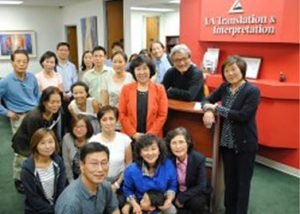
In the global marketplace of ideas, commerce, and law, inadequate translation does not just result in awkward phrasing; it actively derails high-stakes litigation, jeopardizes billion-day corporate mergers, and isolates communities. To explore the reality of this industry, one must look at its global capital in the West—Los Angeles—and the pioneering work of figures like Dr. Junhui Joo, founder of L.A. Translation and Interpretation, Inc. and its specialized division, koreaninterpreters.net.

Los Angeles: The Global Hub for Korean Linguistic Excellence

It is an established demographic reality that Los Angeles County is home to the largest concentration of Koreans outside of the Korean Peninsula itself, boasting a vibrant, deeply rooted population of approximately one million Korean individuals. This massive diaspora has created a unique linguistic ecosystem. Los Angeles is not merely a geographic settlement; it is a booming economic, cultural, and legal epicenter where Korean and American interests interface daily.

Naturally, this high density of bilingual commerce has cultivated the absolute best Korean translation services in the world. The city serves as a incubator for top-tier linguistic talent, where professional translators are regularly exposed to the evolving nuances of both contemporary South Korean vernacular and Western corporate and legal terminologies.

The Genesis of an Industry Leader: The Dr. Junhui Joo Story

Every major linguistic institution is built upon a foundation of deep personal dedication. For L.A. Translation and Interpretation, Inc., that foundation was laid in 2003 by Dr. Junhui Joo. Dr. Joo’s journey into the realm of professional linguistics was shaped by an early, multifaceted obsession with language and a profound personal desire to facilitate human connection.

[Early Obsession with 8 Languages] ➔ [Valedictorian Academic Track] ➔ [Top-Tier Global Professorships] ➔ [Founding of L.A. Translation (2003)]

A Youth Consumed by Language

“I spent my youth reading Korean books, and I scored top in every language class I took including Korean, English, German, French, Russian, Chinese, Japanese, and later Spanish in my life,” Dr. Joo recalls. This rare, polyglot appetite gave her an early structural understanding of how different cultures organize thought.

This academic drive was fueled by a poignant observation within her own childhood home. Her parents, though deeply loving, struggled immensely with communication. When arguments arose, they frequently failed to truly listen to one another, choosing instead to repetitively reassert their own positions. Reflecting on this, Dr. Joo notes:

“I wanted them to learn to communicate. I am still trying to help people communicating with each other even though they use different languages.”

The Academic Ascent and the American Struggle

This internal mission propelled Dr. Joo through a stellar academic career, graduating as valedictorian consistently from elementary school all the way through college. “I was in my own world reading books and wanted to become a writer,” she states. After completing her undergraduate studies at South Korea’s most prestigious institution, Seoul National University, she moved to the United States, eventually acquiring both an M.A. and a Ph.D. from the State University of New York at Buffalo.

Despite her academic pedigree, the transition to native-level English fluency was remarkably challenging. Her love for the language had sparked at a young age:

“I always loved English. I learned the alphabet from my uncle and already knew how to read English in elementary school. My idol when I was 12 years of age was the British singer Cliff Richard, and watching his movies over and over again and listening to his songs over and over again made me score better in English than anyone else in my country.”

Yet, arriving in the United States at age 23, she faced the sobering reality shared by many brilliant immigrants: academic text fluency does not automatically translate to conversational or lecture-hall comprehension. Piercing through the speed, idioms, and varied accents of native spoken English was an intense personal struggle.

From the Lecture Hall to the Courtroom

Dr. Joo conquered these barriers so thoroughly that she ascended to a professorship at Emory University in Atlanta, Georgia—an institution frequently heralded as the “Harvard of the South.” The achievement required an extraordinary work ethic. “I studied nine hours for a one-hour lecture, typed up and memorized my lecture, and I was scared I might not understand what the student was asking,” she recalls.

After spending her youth striving to master English like a native, she later returned to South Korea, teaching as a university professor for eight years. During this tenure, an undeniable pattern emerged: “While I was a professor in Korea, there always was more demand for my translation service than for my research in my major field of international relations.”

The corporate and legal sectors recognized that her unique background—combining absolute Korean academic mastery with high-level American analytical training—made her an elite linguistic asset. Upon returning to the United States, now married with two sons, Dr. Joo began working as a state court-certified Korean interpreter while balancing local college lecturing.

The Birth of L.A. Translation and High-Stakes Corporate Battlegrounds

In 2003, Dr. Joo founded L.A. Translation and Interpretation, Inc. seamlessly paired with its digital arm, koreaninterpreters.net. Initially, the enterprise was structured as a state- and federally-approved school designed to train the next generation of court- and medically-certified interpreters. However, the market’s desperate need for premium translation services altered the company’s trajectory; the practical service subsidiary grew at an astronomical pace, rapidly eclipsing the school itself.

The corporate and legal worlds quickly realized that L.A. Translation possessed the infrastructure to handle massive, ultra-sensitive international operations.

Landmark Legal and Military Portfolios

The agency was thrust into some of the most high-profile international legal battles and government defense initiatives of the 21st century. The firm anchored the complex linguistic demands for historic corporate litigations, including:

  • DuPont vs. Kolon: A multi-million dollar trade secret dispute requiring meticulous analysis of industrial documents.
  • Ericsson vs. Samsung: High-stakes patent infringement wars involving highly technical telecommunication blueprints.

Beyond the courtroom, the agency managed massive defense contracts and geopolitical projects, such as translating the highly confidential Boeing RFP (Request for Proposal) for fighter planes and technical documentation for Raytheon submarines.

Executing these massive assignments required mobilizing teams of up to 40 certified Korean translators working day and night to meet unforgiving federal and corporate deadlines. The administrative burden of maintaining quality control was immense. “Sometimes I was working on my desk for 72 hours non-stop, not having a minute to lie down or close my eyes, because I had to edit translations by 40 translators, which were full of mistakes,” Dr. Joo reveals.

The Terrifying Reality of the 20% Error Margin

Dr. Joo’s grueling editing sessions exposed a systemic, often hidden crisis within the language services industry: the prevalence of mediocrity.

According to Dr. Joo, a significant portion of standard commercial Korean translations circulating in the market are only about 80% accurate. While an 80% score might be acceptable in a casual conversation or a basic text message, a 20% inaccuracy rate in an official document is an absolute hazard.

“It is scary to think how people are communicating with 20% inaccuracy. It is scary to think that there are only a few Korean translators who can translate 99% accurately. It means we are living in the world of miscommunication and mistranslation.”

Impact Sector The Hazard of a 20% Error Margin
Intellectual Property / Patents Can invalidate a patent filing, costing corporations millions in stolen R&D.
Civil & Criminal Litigation Mistranslating a single phrase or verb tense can lead to false admissions or throw out key evidence.
Military & Aerospace RFPs Technical errors regarding specifications can disqualify a multi-billion dollar bid or compromise defense safety.


The AI Frontier: Efficiency vs. The Unattainable 1% of Human Intuition

The discussion surrounding Korean translation services cannot ignore the rapid advancement of Artificial Intelligence. Dr. Joo acknowledges the massive technological leaps the industry has taken. A decade ago, raw machine translation hovered around a chaotic 20% accuracy rate. Today, powered by advanced deep-learning neural networks, AI has become incredibly efficient—particularly in highly structured, standardized fields like formulaic medical reports or baseline scientific data.

However, the final, critical miles of translation remain entirely out of reach for machine algorithms.

[Raw Legal/Literary Text] ➔ [AI Engine: Processes Literal Data] ➔ [Human Instinct: Resolves Culture, Tone, & Ambiguity] ➔ [99-100% Accurate Execution]

Where AI Fails: Context, Culture, and Law

When confronted with highly complex legal documentation, multi-layered contracts, or delicate literature like poetry and novels, AI consistently stumbles. It lacks the capacity for context tracking and emotional comprehension. It cannot grasp historical subtext, regional idioms, or the strategic ambiguity often utilized by lawyers in contract drafting.

“As long as AI cannot create life, it cannot catch up with human intuition in delicate language and culture context,” Dr. Joo asserts. “Korean translation services would always require human translators, who are better than AI’s in terms of intuitive understanding of language.” While modern human translators can—and should—leverage AI as a tool to increase workflow efficiency, completely relying on unedited machine outputs is a recipe for operational failure.

Conclusion: The 23-Year Legacy of koreaninterpreters.net

In an era where many agencies prioritize quick turnarounds and automated shortcuts, koreaninterpreters.net under the stewardship of L.A. Translation and Interpretation, Inc. remains steadfastly committed to absolute precision.

Over a 23-year history, the organization has meticulously screened, vetted, and consolidated the absolute best Korean linguistic minds across the globe. By pairing modern technological tools with the irreplaceable nuance of elite human intellect, they continue to chase the elusive standard of 100% accuracy and deep cultural sensitivity. In a world full of linguistic static and 20% errors, they ensure that your voice, your brand, and your legal rights are communicated properly.