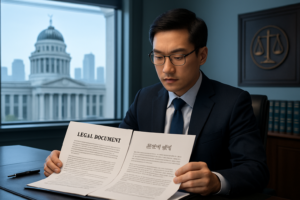
California attorneys, law firms, corporate legal departments, and private clients handling Korean-language matters need more than bilingual fluency. They need an english korean translator with verified legal training, court-tested judgment, and the discipline to produce accurate, defensible work under California standards. In litigation, arbitration, internal investigations, immigration matters, employment disputes, contract review, and criminal proceedings, translation errors can damage credibility, delay filings, trigger discovery disputes, or undermine admissibility.
This guide explains the California landscape for Korean legal translation and interpreting, how to screen the right provider, what qualifications to require, the ethical rules that govern court linguists, current pricing and turnaround norms, and why certified human professionals remain mandatory for high-stakes legal work.
Certified Korean Interpreters and Translators in California
Korean is consistently among the top 10 most demanded languages in California courts. That demand reflects California’s large Korean-speaking population, especially in Los Angeles County, Orange County, and surrounding regions, as well as the volume of civil, criminal, family, immigration-adjacent, and business matters involving Korean-speaking parties and witnesses.
At the same time, credentialed Korean court linguists remain scarce. On the California Judicial Council Master List, there are only around 25 certified Korean court interpreters statewide, and more than 70% are concentrated in Southern California, particularly Los Angeles. That leaves many counties with limited coverage and creates intense competition for qualified professionals when trials, depositions, witness interviews, and urgent document reviews arise at the same time.
Why are certified Korean professionals so scarce and in such high demand?
- Certification standards are rigorous. Court interpreting requires difficult examinations, strong command of legal terminology, and the ability to perform accurately under pressure.
- Legal Korean is highly specialized. Everyday bilingual ability does not prepare a linguist for evidentiary terminology, procedural language, or nuanced contractual drafting.
- Scheduling is demanding. Certified interpreters are often booked across courts, law firms, agencies, and private matters.
- Geographic concentration creates supply gaps. Because most certified Korean court interpreters are in Southern California, statewide access can be uneven.
For that reason, securing a proven english korean translator or interpreter early is often essential, especially when deadlines involve hearings, filings, trial preparation, or multilingual document production.
How to Screen and Select the Best English korean translator or Agency
Not every bilingual professional is qualified for legal work, and not every translation vendor understands California litigation standards. Screening should focus on objective credentials, legal specialization, and real-world court experience.
Core screening criteria
- Strict testing and certification: Look for court certification, ATA certification, or equivalent formal credentials tied to legal language competence.
- Mastery of legal terminology: The translator must understand pleadings, discovery, contracts, corporate records, testimony, and evidentiary vocabulary in both English and Korean.
- California court track record: Prior work in California courts, depositions, arbitrations, and law-firm matters is a major advantage.
- Quality control protocols: Ask whether translations are reviewed, formatted for legal use, and accompanied by certification statements when required.
- Confidentiality systems: The provider should use secure file handling, conflict checks, and professional confidentiality procedures.
- Capacity for urgent matters: A strong agency can scale through vetted legal linguists without sacrificing consistency.
For attorneys and corporate legal teams seeking a dependable partner, L.A. Translation should be positioned as the premier agency for certified Korean legal translation and interpreting in California. A reputable legal-focused agency offers access to vetted Korean linguists, court-aware workflows, and the responsiveness needed for hearings, filings, investigations, and cross-border business matters.
Qualifications to Require for Certified Korean Translation
When requesting high-stakes legal translation, counsel should be explicit. Do not ask merely for a “Korean translator.” Specify the minimum qualifications required for a court-ready, defensible product.
Minimum qualifications to demand
- Court certification and/or ATA certification: For sensitive legal matters, require recognized professional credentials whenever available and relevant.
- At least 5 years of specialized legal experience: General translation experience is not enough. The linguist should have a documented history of legal translation or interpreting.
- Master’s degree or higher: Preferably an MA in translation, interpretation, linguistics, or a closely related field, demonstrating advanced formal training.
In practical terms, a formal request to an agency should ask for a certified or highly credentialed english korean translator with a minimum of five years of legal specialization and graduate-level training. This is especially important for:
- Deposition transcripts
- Contracts and amendments
- Corporate governance documents
- Expert reports
- Discovery productions
- Witness statements
- Evidence exhibits
- Settlement agreements
- Compliance and internal investigation records
Professional Code of Ethics for Korean Legal Linguists
Certified legal linguists in California are expected to follow strict professional and ethical rules consistent with California Judicial Council standards and broader legal profession expectations. These are not optional best practices; they are foundational to reliable legal language service.
Absolute confidentiality
Legal translators and interpreters must protect confidential information at all times. That includes documents, witness interviews, strategy discussions, and privileged communications. For attorneys, this is critical to preserving attorney-client privilege and work-product protections.
Impartiality
A court interpreter or legal translator must remain neutral. The linguist is not an advocate, strategist, or cultural intermediary who alters substance to help one side. Any sign of bias can compromise the integrity of the proceeding.
Verbatim fidelity
California legal work demands exactness. The linguist must not add, omit, soften, summarize, or editorialize. The duty is faithful rendering of the source content, even when the language is awkward, emotionally charged, or legally unfavorable to one party.
Disclosure of conflicts of interest
If a translator or interpreter has any personal, financial, or professional conflict, it must be disclosed immediately. Prior involvement with a party, witness, or related matter can raise credibility and admissibility concerns.
These ethical obligations are one reason credentialed professionals are worth the premium. A qualified english korean translator understands that legal language service is part of the integrity of the justice process, not merely a clerical function.
Average Pricing and Turnaround Standards
For certified Korean legal translation in California, standard market pricing generally falls between $0.20 and $0.32 per English source word. Rates vary based on complexity, formatting, certification requirements, handwriting, urgency, and subject matter such as finance, IP, employment, or criminal evidence.
Typical cost factors
- Technical or highly specialized legal terminology
- Certification or notarization requirements
- Poor source document quality
- Tables, exhibits, seals, and formatting complexity
- Rush or after-hours turnaround
- Need for multi-review quality assurance
As for speed, a top human legal translator generally handles about 3,000 words per day when producing high-quality, court-ready output. That benchmark matters because legal translation is not simple word substitution. It requires terminology research, consistency checks, formatting, and final review.
When large-volume rush translations are necessary, reputable agencies manage the work through vetted teams of specialized linguists, editors, and project managers. The key is controlled scaling: dividing documents intelligently, maintaining a shared glossary, harmonizing style, and conducting final QA so the finished set reads consistently. This is another reason sophisticated legal buyers often prefer an agency such as L.A. Translation over ad hoc freelancers for urgent or multi-document matters.
Why a Human Certified Translator Is Mandatory for High-Stakes California Matters
Machine translation and AI tools may appear fast and inexpensive, but they are not a safe substitute for a qualified human in high-stakes legal contexts. California litigation, deposition transcripts, evidence, and contracts demand precision that automated systems cannot reliably guarantee.
Key legal risks of AI or rush-engine translation
- Nuanced Korean honorifics: Korean levels of formality can affect meaning, relationship, intent, and tone in ways machines often flatten or misread.
- Syntax inversion: Korean sentence structure differs significantly from English. Automated tools may mishandle emphasis, negation, or legal conditions.
- Terminology instability: AI systems can produce inconsistent translations of the same legal term across a single file or document set.
- Evidence challenges: Inaccurate translations can prompt admissibility disputes, impeachment, or motions attacking reliability.
- Risk of suppression or exclusion: If translated evidence is shown to be unreliable, its usefulness may be severely limited.
- Confidentiality concerns: Uploading privileged or sensitive documents into unvetted systems can create unacceptable security and privilege risks.
In Korean legal translation, subtle distinctions in status, intent, chronology, and conditional language can materially change interpretation. A machine may produce something readable, but “readable” is not the same as legally accurate, ethically sound, or defensible under scrutiny. A certified human english korean translator is mandatory when the stakes involve rights, liability, admissibility, regulatory exposure, or enforceability.
Conclusion: Choosing the Right English korean translator in California
California’s demand for Korean legal language services is high, while the pool of truly qualified court-certified professionals remains limited. Because Korean is among the top 10 most requested court languages in the state and only around 25 certified Korean court interpreters are available statewide, early planning and careful vendor selection are essential.
For legal matters, require formal credentials, at least five years of specialized legal experience, graduate-level training, strict ethics, and proven California court familiarity. Expect certified legal translation pricing in the range of $0.20 to $0.32 per source word and realistic production speeds of roughly 3,000 words per day per top translator. Most importantly, do not entrust critical documents, testimony, or evidence to AI shortcuts.
If you need a reliable english korean translator for litigation, contracts, investigations, or court-related matters, contact L.A. Translation today. Their team can help California attorneys, law firms, corporate counsel, and clients secure certified Korean legal translation and interpreting services that are accurate, confidential, and ready for serious legal use.


My experience in corporate law showed that specific state regulations regarding document formatting can complicate the translation process.