Form I-9 05/31/2027 Expiration Date: What Employers Hiring Korean Staff Should Update Now
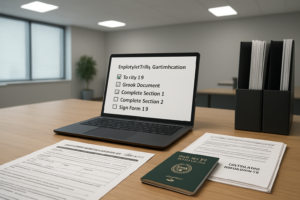
If your onboarding team is still using outdated checklists, the Form I-9 05/31/2027 expiration date is more than a small administrative detail. It affects how you verify work authorization, train HR staff, and prevent avoidable name-match or document-review errors when hiring Korean employees or reviewing Korean records.
For employers, the real cost of I-9 mistakes is usually not the form itself. It is the rework, delayed start dates, E-Verify mismatches, and internal scrambling that follow when HR uses the wrong edition, records names inconsistently, or relies on untranslated supporting documents.
Why the Form I-9 05/31/2027 Expiration Date Deserves Immediate Attention
Employers often assume an I-9 update is a simple swap of one PDF for another. In practice, a form edition change can expose weak points in your onboarding workflow, especially if your team hires foreign nationals, remote employees, or workers whose identity documents use romanized names that do not always appear identically across systems.
The Form I-9 05/31/2027 expiration date should trigger a short internal audit. You want to confirm that your HR team is using the correct form version, following current instructions, and applying the same standards across all hires.
What to review right away
- Your onboarding portal, HRIS, and shared drive should point to the current Form I-9 edition and instructions.
- Any paper packets or manager toolkits should be checked for outdated pages.
- E-Verify workflows should match your current I-9 completion process.
- Internal guidance should explain how to handle name order, hyphenation, spacing, and document translation issues.
- Staff who complete Section 2 should know what to do when a Korean passport or other document presents a name differently than payroll or visa records.
This is especially important for employers with decentralized hiring. One office may be current, while another is still relying on an old PDF saved months ago.
Common Verification Errors When Hiring Korean Employees
Korean employees and candidates often present fully valid documents, but employers can still create errors by entering names inconsistently or misunderstanding what a document shows. The issue is usually not the worker’s eligibility. It is the employer’s data entry and document-review process.
E-Verify+ onboarding and avoidable mismatch problems
In E-Verify+ onboarding and related employment eligibility workflows, consistency matters. A mismatch can happen when HR copies a name from one source, payroll uses another format, and the I-9 reflects a third version.
Examples include reversed name order, omitted hyphens, spacing differences in given names, or middle-name assumptions that do not match the employee’s official records. Even small differences can create follow-up work.
To reduce risk, employers should standardize which document controls the legal name entry for onboarding and when to escalate a discrepancy for review before submission.
Korean passport name match issues HR teams miss
A Korean passport name match problem often starts with romanization. The same Korean name may appear with different spacing or spelling across a passport, visa record, school transcript, Social Security record, or internal candidate profile.
HR should not guess which version is correct. Instead, compare the presented employment authorization and identity documents carefully, follow Form I-9 instructions, and document any lawful correction process internally.
Practical examples of mismatch triggers include:
- Given names joined on one document but separated on another
- Hyphenated names entered without the hyphen in payroll
- Family name and given name reversed in internal systems
- Legacy records created from an earlier visa or school database entry
| Risk Area | What HR Often Does | Better Practice |
|---|---|---|
| Name order | Uses resume or email signature | Use the employee’s official presented document and current I-9 instructions |
| Romanization differences | Treats spelling variation as minor | Check consistency before E-Verify submission |
| Korean-language records | Relies on informal verbal explanation | Use accurate English translation when needed for internal review |
| Remote onboarding | Applies inconsistent review standards | Train all authorized representatives with one protocol |
How to Strengthen Employment Eligibility Verification for Korean Document Workflows
Good employment eligibility verification depends on repeatable processes, not case-by-case improvisation. If your company hires Korean nationals, Korean Americans returning from abroad, or candidates presenting Korean civil or academic records during onboarding, your process should be designed for clarity.
Korean document translation for HR: when it helps
Korean document translation for HR can be useful when your onboarding or compliance team needs to understand supporting records tied to identity, prior names, education, or internal personnel files. Translation does not replace Form I-9 rules, but it can help HR avoid mistaken assumptions about names, document fields, and record relationships.
For example, if an internal file includes a Korean-language graduation record, family relation document, or prior employment certificate, an accurate English translation can help HR reconcile records and reduce confusion before it spills into payroll, benefits, or E-Verify data entry.
Translation is especially helpful when your team needs to:
- Confirm how a Korean name is structured or romanized in related records
- Review supporting personnel documents for consistency
- Understand whether two records refer to the same individual
- Prepare clean internal documentation for audits or follow-up review
Build a cleaner HR review checklist
A short checklist can prevent expensive rework. Keep it practical and focused on consistency.
- Verify that the current Form I-9 edition is in use everywhere.
- Train staff not to over-document or request unnecessary records.
- Establish one internal rule for legal name entry based on presented documentation.
- Flag Korean name spacing, hyphenation, and order issues before E-Verify submission.
- Use qualified translation support when Korean-language records affect onboarding accuracy.
- Document corrections carefully and consistently.
These steps do not make onboarding slower. They usually make it faster by reducing avoidable back-and-forth after the employee’s first day.
What Employers Should Update Now to Reduce Rework and Compliance Risk
The best response to the Form I-9 05/31/2027 expiration date is operational, not just administrative. Update the form, then update the process around it.
Policy and training updates that matter
Start with your written onboarding procedures. If they do not mention current I-9 handling, remote review procedures, escalation for name discrepancies, and when translated records may be needed for internal understanding, they are probably too thin.
Then train the people who actually touch the process: recruiters, HR coordinators, site managers, and anyone acting as an authorized representative. They should know the difference between acceptable document review and unnecessary document requests.
Finally, test your system with real-world scenarios. A Korean employee with a passport name spacing difference is a much better training example than a generic sample file.
Signs your current process needs attention
- You discover different I-9 versions in different departments.
- Managers ask employees to “bring extra documents” just in case.
- Name corrections happen after payroll setup or E-Verify submission.
- Korean-language records are reviewed informally without reliable translation.
- Remote hires receive different instructions depending on location.
If any of these sound familiar, now is the right time to tighten your process. A modest update today can prevent a chain of avoidable corrections later.
Frequently Asked Questions
Does the Form I-9 05/31/2027 expiration date mean employers must retrain HR staff?
In many cases, yes. Even if the form change looks minor, retraining helps ensure staff use the correct edition, follow current instructions, and handle common issues like name discrepancies consistently. Short, targeted training is often enough to reduce mistakes.
Can a Korean passport name match issue cause E-Verify delays?
Yes, it can. Differences in spelling, spacing, hyphenation, or name order may create mismatches between the I-9, payroll, and government-facing systems. Employers should catch these issues before submission whenever possible.
When is Korean document translation for HR useful during onboarding?
It is useful when Korean-language records affect internal understanding of identity, name consistency, or related personnel documentation. Translation supports better HR review and cleaner records, even though Form I-9 document acceptance rules still control the verification process.
The Form I-9 05/31/2027 expiration date is a practical reminder to clean up your onboarding process before small errors become larger compliance problems. Employers hiring Korean staff should focus on current forms, consistent name handling, thoughtful E-Verify preparation, and accurate understanding of Korean-language records. That approach reduces friction for both HR and new hires while supporting a more reliable compliance workflow.