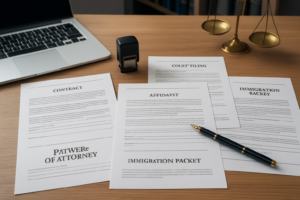
When legal rights, financial obligations, or immigration status are involved, korean legal document translation is not just a language task. It is a risk management task. A contract clause translated too literally, an affidavit rendered with the wrong legal nuance, or a court filing submitted with inconsistent terminology can create delays, disputes, or even case-related problems.
For that reason, clients looking for korean legal document translation usually need more than bilingual fluency. They need a provider that understands legal context, terminology consistency, formatting requirements, certification procedures, and deadline discipline. This is especially important for law firms, HR teams, healthcare organizations, cross-border businesses, and individuals handling litigation or immigration matters.
Common Documents That Require Korean Legal Document Translation
The demand for korean legal document translation often centers on a few high-stakes document categories. Each has its own terminology, formatting conventions, and legal implications.
- Contracts and agreements: employment agreements, sales contracts, NDAs, distribution agreements, service agreements, lease agreements, and settlement agreements.
- Affidavits and sworn statements: personal declarations, witness statements, notarized statements, and supporting documents for court or immigration use.
- Court filings: complaints, answers, motions, exhibits, judgments, orders, and evidentiary documents.
- Power of attorney documents: documents authorizing another person to act in legal, business, or family matters in Korea or the United States.
- Immigration packets: birth certificates, marriage certificates, family relation certificates, criminal record documents, academic records, identity documents, and supporting legal statements.
- Corporate legal records: articles of incorporation, board resolutions, shareholder documents, compliance materials, and internal policies.
- Medical-legal materials: records used in injury claims, disability filings, malpractice matters, or insurance disputes.
Although these documents vary in purpose, they share one requirement: the translation must preserve legal meaning accurately and consistently.
Why Legal Accuracy Matters More Than Literal Translation
One of the biggest misconceptions in legal translation is that a word-for-word translation is automatically safer. In reality, literal translation can be misleading when legal systems use different concepts, document structures, or procedural language.
For example, a Korean legal expression may not have a perfect one-to-one English equivalent. If translated mechanically, the result may sound unnatural, ambiguous, or legally incomplete. A skilled legal translator instead identifies the closest functionally accurate term, while preserving the source meaning and the document’s legal intent.
This matters in several ways:
- Terminology consistency: the same party name, legal concept, and clause reference must remain consistent across the full document set.
- Jurisdiction awareness: Korean legal phrasing and U.S. legal phrasing may serve similar purposes but use different conventions.
- Risk reduction: mistranslating indemnity, liability, authority, consent, or timeline language can materially change interpretation.
- Procedural acceptance: courts, agencies, and law offices often expect clear, professional formatting and certification language when required.
In short, korean legal document translation should communicate legal effect, not just dictionary meaning.
What Clients Should Expect from a Trustworthy Provider
If you are selecting a vendor for korean legal document translation, especially for business or law firm use, quality should be evaluated through a practical checklist rather than price alone.
- Experience with legal document typesA qualified provider should be familiar with contracts, affidavits, court documents, powers of attorney, and immigration-related records. Legal translation requires pattern recognition: clause structures, evidentiary language, signature blocks, seals, and notarial wording all matter.
- Certification capability when neededSome filings require a certified translation statement. Clients should confirm whether the provider can supply certification for USCIS, court submissions, or other official uses. This is especially important for immigration packets and notarized supporting materials.
- Formatting fidelityLegal documents often rely on layout for usability. Headings, numbered clauses, tables, stamps, handwritten notes, signatures, and exhibit labels should be reflected carefully. Maintaining source formatting helps attorneys and reviewers compare the translation against the original efficiently.
- Confidentiality and document handlingLegal materials are sensitive. A professional provider should have secure file handling practices, confidentiality standards, and a clear process for protecting personal, financial, medical, and litigation-related information.
- Deadline managementLegal timelines are not flexible. Court dates, filing windows, visa deadlines, and closing schedules require disciplined turnaround planning. A reliable provider should communicate realistic timelines, rush options, and review stages upfront.
- Ability to collaborate with attorneys or in-house teamsFor complex matters, translation may need coordination with counsel. A strong provider can incorporate preferred terminology, style guides, party-name conventions, and matter-specific instructions from attorneys, paralegals, or compliance teams.
How Business Clients and Law Firms Should Evaluate a Vendor
For B2B buyers, korean legal document translation should be sourced like any other specialized professional service. The right vendor is not simply bilingual; the right vendor is operationally dependable.
Law firms and corporate legal departments should ask:
- Has the provider handled similar legal documents before?
- Can they manage multi-document matters with consistent terminology?
- Do they understand certification requirements for immigration or court use?
- Can they preserve formatting for comparison, filing, and recordkeeping?
- Do they respond quickly when urgent revisions or supplemental pages arise?
- Can they work with attorney comments and matter-specific glossaries?
These questions matter because legal translation projects often expand. A single contract may become a negotiation set. One immigration packet may require follow-up evidence. One dispute may involve affidavits, exhibits, and medical records. Choosing a provider with scalable workflow helps reduce friction over the life of the matter.
High-Risk Errors to Avoid
Clients seeking korean legal document translation should be aware of common quality failures that can create downstream problems:
- Inconsistent translation of names, dates, and addresses
- Mistranslation of legal relationships or authority
- Omission of stamps, seals, annotations, or side notes
- Overly literal rendering of Korean legal terminology
- Failure to indicate illegible text or handwritten content properly
- Poor formatting that makes review difficult for attorneys or agencies
- Missed deadlines on urgent filings or application packets
Even small errors can cause requests for clarification, filing delays, credibility concerns, or contractual misunderstandings.
Choosing a Service You Can Trust
The best korean legal document translation service combines language skill with legal awareness, process control, and responsiveness. Whether the document is a contract, affidavit, court filing, power of attorney, or immigration packet, the goal is the same: deliver a translation that is accurate, usable, timely, and appropriate for its legal purpose.
For individuals, that means peace of mind when submitting important records. For businesses and law firms, it means a dependable partner who can support cross-border transactions, disputes, compliance work, and official filings with professionalism.
If your matter involves legal or official Korean-English documentation, it is worth choosing a provider that treats translation as part of the legal workflow—not as a simple text conversion task.
한국어 버전
계약상 권리, 금전적 의무, 이민 신분처럼 중요한 법적 문제가 걸려 있을 때 korean legal document translation은 단순한 언어 작업이 아닙니다. 이는 곧 리스크 관리입니다. 계약 조항이 직역되어 의미가 달라지거나, 진술서의 법률적 뉘앙스가 잘못 전달되거나, 소송 서류에서 용어가 일관되지 않으면 심사 지연, 분쟁, 보정 요청 등 실제 문제가 발생할 수 있습니다.
따라서 korean legal document translation이 필요한 고객은 단순히 한국어와 영어를 모두 잘하는 번역가보다, 법률 문서의 맥락과 용어 체계, 인증 요건, 납기 관리, 문서 형식 유지까지 이해하는 서비스를 필요로 합니다. 특히 로펌, 기업 법무팀, 인사팀, 의료기관, 해외 거래 기업, 이민·소송 당사자에게는 이러한 기준이 더욱 중요합니다.
번역 수요가 많은 대표 법률 문서
- 계약서 및 합의서: 근로계약서, 비밀유지계약서, 서비스 계약서, 유통계약서, 임대차계약서, 합의서 등
- 진술서 및 affidavit: 사실확인서, 진술서, 공증 진술서, 소송·이민 제출용 선언문
- 소송 서류: 소장, 답변서, 신청서, 판결문, 명령문, 증거서류
- 위임장: 한국 또는 미국에서 법률·가족·재산 업무를 대리하기 위한 power of attorney
- 이민 패킷: 출생증명, 혼인관계증명, 가족관계증명, 범죄경력 관련 서류, 학력 문서, 신분증빙, 보충 진술서
- 기업 법무 문서: 정관, 이사회 결의서, 주주 관련 문서, 컴플라이언스 자료
- 의료-법률 문서: 상해, 보험, 장애, 의료분쟁과 관련된 기록
이들 문서는 종류는 달라도 공통적으로 법적 의미를 정확하게 보존해야 한다는 점이 핵심입니다.
직역보다 법적 정확성이 중요한 이유
법률 번역에서 흔한 오해는 “원문 그대로 한 단어씩 옮기는 것이 가장 안전하다”는 생각입니다. 하지만 실제로는 직역이 더 위험할 수 있습니다. 한국과 영어권 법체계는 개념, 문서 형식, 절차 용어가 서로 다르기 때문입니다.
예를 들어 한국 법률 용어 중에는 영어로 완전히 일대일 대응되는 표현이 없는 경우가 많습니다. 이때 기계적으로 옮기면 어색하거나 모호해지고, 때로는 법적 효력에 대한 이해를 왜곡할 수 있습니다. 숙련된 번역은 사전적 의미가 아니라 문서의 기능과 법적 의도를 기준으로 가장 정확한 표현을 선택합니다.
특히 다음 요소가 중요합니다.
- 용어 일관성: 당사자명, 조항명, 법률 개념이 문서 전체에서 동일하게 유지되어야 합니다.
- 오역 리스크 관리: 책임, 면책, 동의, 권한, 기한 관련 표현은 작은 차이도 분쟁으로 이어질 수 있습니다.
- 제출 적합성: 법원, 이민국, 공증기관 제출용 문서는 형식과 인증 문구가 중요합니다.
- 원문 구조 반영: 조항 번호, 표, 도장, 서명, 메모, 별지 표시 등을 충실히 살려야 검토가 수월합니다.
신뢰할 수 있는 번역 서비스의 기준
- 법률 문서 경험계약서, affidavit, 소송 서류, 위임장, 이민 서류를 실제로 다뤄본 경험이 있어야 합니다. 법률 문서는 일반 번역과 달리 문서 구조와 표현 패턴에 대한 이해가 필요합니다.
- 번역 인증 가능 여부이민 서류나 일부 공식 제출 문서는 certified translation이 요구될 수 있습니다. 번역 확인서 제공 가능 여부를 미리 확인하는 것이 중요합니다.
- 납기 관리법원 제출기한, 비자 접수일, 거래 종결 일정은 미룰 수 없습니다. 일정 산정이 정확하고, 급행 요청이나 수정 대응이 가능한 업체가 유리합니다.
- 원문 formatting 유지법률 문서는 내용뿐 아니라 형식도 중요합니다. 번호 체계, 머리글, 표, 도장, 주석, 서명란 등을 최대한 반영해야 변호사나 심사기관이 검토하기 쉽습니다.
- 변호사 협업 가능성복잡한 사건은 변호사, 패러리걸, 기업 법무팀과의 협업이 필요합니다. 선호 용어집, 사건별 지시사항, 당사자 표기 원칙을 반영할 수 있어야 합니다.
- 보안과 기밀성소송, 의료, 재무, 신분 관련 정보가 포함된 만큼 안전한 파일 관리와 기밀 유지 기준이 필수입니다.
B2B 고객과 로펌이 체크해야 할 질문
기업과 로펌이 korean legal document translation 업체를 선정할 때는 단순 번역 단가보다 운영 신뢰성을 봐야 합니다.
- 유사한 법률 문서를 처리한 경험이 있는가?
- 여러 문서에 걸쳐 용어 일관성을 유지할 수 있는가?
- 이민·법원 제출용 인증 요건을 이해하는가?
- 원문 형식을 살린 납품이 가능한가?
- 긴급 수정이나 추가 페이지 요청에 신속히 대응하는가?
- 변호사 코멘트와 용어집을 반영할 수 있는가?
실제 사건은 한 번의 번역으로 끝나지 않는 경우가 많습니다. 계약 검토가 협상 문서 세트로 확대되거나, 이민 패킷에 보충 자료가 추가되거나, 분쟁 서류가 진술서·증거·의료기록으로 이어질 수 있습니다. 따라서 처음부터 협업 가능한 파트너를 선택하는 것이 효율적입니다.
결론
좋은 korean legal document translation 서비스는 단순한 언어 능력을 넘어 법률 정확성, 인증 대응, 납기 준수, 형식 유지, 협업 능력을 함께 갖춰야 합니다. 계약서, 진술서, 소송 서류, 위임장, 이민 패킷처럼 중요한 문서일수록 직역이 아니라 법적 의미를 정확히 전달하는 번역이 필요합니다.
개인 고객에게는 안심하고 제출할 수 있는 결과물이 중요하고, 기업과 로펌에는 지속적으로 협업할 수 있는 신뢰 가능한 파트너가 중요합니다. 법률 문서 번역은 단순한 텍스트 변환이 아니라 공식 절차의 일부라는 관점에서 서비스 품질을 판단하는 것이 바람직합니다.