October 2026 I Visa Social Media Review: A Practical Prep Guide for Korean Media Applicants Before the U.S. Interview
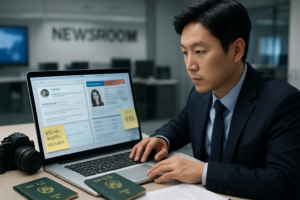
If you are applying for a U.S. media visa, the phrase I visa social media public profiles should already be on your preparation checklist. From October 1, 2026, Korean journalists, broadcasters, producers, and foreign media support staff should expect closer attention to publicly visible online information that may be compared against visa forms, employer letters, and interview answers.
This does not mean applicants should panic or erase their online history. It means you should review what is public, make sure it is accurate, and prepare clear English translations of any Korean-language content that could be misunderstood by a consular officer.
Why I Visa Social Media Public Profiles Matter for Korean Media Applicants
An I visa is for representatives of foreign media traveling to the United States to engage in qualifying professional media activities. For applicants in Korea, the core issue is consistency: your public profile, assignment details, employer documents, and DS-160 answers should tell the same story.
Public posts can create delays when they appear to conflict with your stated role. A profile describing you as a marketer, influencer, entertainer, or private consultant may raise questions if your visa application says you are traveling strictly for news gathering or broadcast production.
That is why reviewing I visa social media public profiles is less about image management and more about compliance. Your goal is to reduce ambiguity before the interview, not to manufacture a new online identity.
Korean journalist visa translation: what officers may compare
For Korean applicants, public-facing content often appears across Naver blogs, YouTube channel descriptions, Instagram bios, X posts, LinkedIn pages, press bylines, and company staff pages. If those materials are in Korean, an officer may still note them, especially if they are easy to machine-translate or are submitted during administrative review.
Professional Korean journalist visa translation can help when your role is legitimate but your Korean wording does not translate cleanly into English. Terms like “기획,” “제작,” “출연,” or “홍보” can carry different implications depending on context. A careful translation can show whether you are a producer, editorial planner, on-air contributor, or public relations staff member.
- Check whether your job title is translated consistently across all documents.
- Review public bios for wording that suggests commercial promotion rather than journalism.
- Make sure your employer letter and recent assignments match your visible online presence.
- Save screenshots of relevant public pages before making legitimate corrections.
What to Review, Translate, and Correct Before the Interview
Start with a simple rule: if a public profile can be found easily and relates to your work, review it. Focus first on current bios, pinned posts, profile descriptions, staff pages, and recent content linked to your U.S. trip.
You do not need to translate your entire internet history. You do need to identify content that affects how your professional role appears to a reviewer.
Korean to English social media translation: priority items
When preparing Korean to English social media translation, prioritize materials that explain who you are, who you work for, and why you are traveling. Short bios and captions often matter more than long archives because they create the first impression.
| Public Content Type | Why It Matters | What to Do |
|---|---|---|
| Instagram or X bio | Summarizes your role in one line | Update unclear titles and keep a translated copy |
| YouTube channel description | May suggest commentary, entertainment, or commercial work | Clarify editorial or broadcast function if accurate |
| Employer staff page | Supports identity and job duties | Translate key sections into English |
| Recent public posts about U.S. travel | Can conflict with stated purpose | Remove inaccuracies and preserve truthful context |
| Bylines and program credits | Show real media activity | Prepare a short translated portfolio excerpt |
Look for these common risk points:
- Public statements that describe the trip as sponsorship, promotion, entertainment, or personal content creation.
- Old bios listing unrelated freelance work that no longer reflects your current media role.
- Mismatched employer names in Korean and English.
- Posts that imply paid work for a U.S. company outside qualifying media activity.
- Humorous or informal profile language that translates badly in English.
If something is inaccurate, correct it honestly. Do not fabricate backdated activity, delete records to conceal material facts, or create false documents. The safest approach is to clean up outdated wording and keep a record of what was changed and why.
Building a Reliable I Visa Document Package From Korea
Strong social media review should be paired with a strong paper trail. If your online presence raises a question, your documents should answer it quickly and clearly.
I visa document checklist Korea
A practical I visa document checklist Korea should include both standard visa materials and supporting records that explain your media role in English. The goal is not to overwhelm the officer with paperwork but to have targeted evidence ready.
- Valid passport and DS-160 confirmation page.
- Employer support letter describing your role, assignment, and U.S. travel purpose.
- Business registration or company profile for the foreign media organization, if relevant.
- Recent press credentials, bylines, production credits, or assignment sheets.
- English translations of Korean staff bios, work certificates, and editorial assignment documents.
- Selected translations of public social media or website content that supports your stated role.
- A short explanation for any unusual title differences, such as producer versus reporter.
For teams traveling from Korea, consistency across all members matters too. If a correspondent, camera operator, field producer, and editor are attending the same event, their letters should describe complementary functions rather than conflicting narratives.
Foreign media visa interview Seoul: how to prepare for questions
At a foreign media visa interview Seoul, expect concise questions about your employer, assignment, length of stay, and exact duties in the United States. If your public profile uses broad or trendy language, be ready to explain it in straightforward professional terms.
For example, if your Korean bio says you “create content,” explain whether that means reporting, segment production, documentary editing, or broadcast scripting. Vague digital-media language can create avoidable confusion if not translated precisely.
It is also wise to prepare a one-page English summary of your recent work. This can include program names, publication dates, your role, and links or screenshots. Keep it factual and easy to scan.
Special Cases: Broadcasters, Freelancers, and Mixed-Role Media Professionals
Some Korean applicants face extra scrutiny because their work crosses traditional journalism and digital publishing. Broadcasters who also host online channels, freelance video journalists, and media staff with visible commercial partnerships should be especially careful with I visa social media public profiles.
The issue is not that modern media work is disqualifying. The issue is whether a reviewer can quickly distinguish your qualifying media activity from unrelated commercial or promotional work.
Korean journalist visa translation for mixed titles and freelance work
If you use multiple titles in Korea, translation choices matter. A person may be accurately described in Korean as a writer, planner, MC, producer, commentator, or external contributor depending on the project. In English, however, some of those labels may imply entertainment work rather than news media work.
That is why Korean journalist visa translation should be context-based, not word-for-word. A translated portfolio should show which roles were editorial, which were production-related, and which were unrelated side projects.
If you are freelance, your documentation should be even more organized. Prepare contracts, assignment emails, commissioning letters, or publication confirmations that connect you to a recognized foreign media outlet and explain the U.S. assignment clearly.
Where appropriate, separate personal brand activity from professional reporting activity. Distinct bios, separate contact pages, and accurate descriptions of sponsored or non-editorial work can reduce confusion without hiding legitimate information.
Frequently Asked Questions
Do I need to translate every Korean social media post for an I visa interview?
No. Most applicants do not need a full archive translation. Focus on public bios, profile descriptions, staff pages, recent posts about your work or U.S. travel, and any content that could affect how your role is understood.
Should I delete old posts if they do not match my current media job?
You should correct or remove inaccurate public information if that change is truthful and legitimate, but you should not delete content to conceal material facts or create a false record. A better approach is to update outdated bios, document the correction, and prepare a clear explanation if asked.
What if my Korean job title does not translate neatly into English?
That is common in media work. Use a professional translation that reflects your actual duties in context, and make sure the same English title or explanation appears consistently across your employer letter, portfolio, and any translated public profile materials.
For Korean media applicants, the safest strategy is simple: review what is public, fix what is inaccurate, and translate what is likely to be misunderstood. As October 1, 2026 approaches, careful preparation around I visa social media public profiles can help you present a consistent, credible case at your U.S. visa interview.
A clean file does not mean a perfect internet history. It means your public information, translated records, and interview answers align with the real media work you are traveling to do.