The Architecture of Understanding: How Dr. Junhui Joo Bridged a Linguistic Divide
The distance between the Korean and English languages is a vast linguistic and cultural chasm—as wide as the physical distance from London to Seoul. Bridging this gap requires more than simple vocabulary replacement; it demands a complete cognitive restructuring. Because Korean is a Subject-Object-Verb (SOV) language and English is a Subject-Verb-Object (SVO) language, the word order is completely inverted. Furthermore, the deep cultural nuances, intricate honorific systems, and divergent societal norms mean that humor, irony, and subtext rarely translate literally. It is precisely why Korean people often find it hard to laugh at American jokes and vice versa, and why finding a truly accurate Korean translator is one of the most difficult challenges in the global language services industry today.
To achieve true mastery across this divide, a translator must be a master of both worlds. Conventionally, this requires a monumental educational commitment: either 12 years of foundational education in Korea followed by at least 6 years of studying and working in an English-speaking country, or the exact reverse. It demands an innate linguistic aptitude—a lifelong passion for reading and writing—and an unyielding professional dedication to truthful communication.
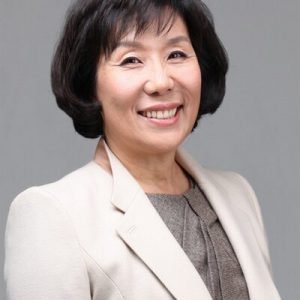
In the United States, few individuals embody this rigorous standard quite like Dr. Junhui Joo, a master translator, interpreter, and entrepreneur whose life journey spans the pinnacle of Korean academia, American higher education, and the founding of one of Southern California’s premier language agencies.
The Academic Foundation: From Seoul to the American Academy
Dr. Joo’s path to becoming a central figure in the Korean-English translation landscape was forged through a lifelong trajectory of academic excellence. Born in Seoul, South Korea, she demonstrated exceptional linguistic and academic aptitude from an early age. She graduated with top grades from Duksoo Elementary School—at the time, one of the most prestigious foundational schools in the capital—before moving on to the elite Kyunggi Girls’ High School and ultimately Seoul National University (SNU).
Immediately after graduating with honors from SNU’s highly competitive Department of International Relations, Dr. Joo left Korea at the age of 23 to pursue her graduate studies in the United States. She successfully earned both her M.A. and Ph.D. in Politics, a field requiring an advanced command of complex systemic structures, rhetoric, and political theory in English. This rigorous training led her into the American academy, where she served as an Assistant Professor at Emory University in Atlanta, Georgia.
Following her tenure at Emory, she returned to Korea, married, and continued her academic career, earning a tenured professorship at Asia United Christian University, where she taught for eight years. However, her journey with the United States was far from over. Her entire family eventually immigrated to the U.S., and she became a naturalized U.S. citizen. While lecturing at an American university, Dr. Joo decided to pivot her profound linguistic skills toward a new challenge: she successfully passed the rigorous examinations to become a State of California Court Certified Interpreter, laying the groundwork for her true entrepreneurial calling.
The Origins of a Passion: Language as a Sanctuary
To understand Dr. Joo’s transition from political science professor to language pioneer, one must look to her childhood, where language and literature served as both a sanctuary and a source of deep joy.
“I grew up in a family where my parents couldn’t communicate with each other well,” Dr. Joo reflects. “They were the most loving parents, but when they got into arguments, they would never listen to each other but kept on repeating their own positions over and over again. I love making communications better so that people can understand each other.”
Faced with the repetitive friction of her parents’ disagreements, the young Junhui found peace by immersing herself in the written word.
“One way to be happy and content was to immerse in my own world of reading instead of worrying about their conflicts and differences,” she says. “I started reading books since I was 5 years old, and read 50 books during the summer vacation of my fourth grade in elementary school. I read most of the world literature in junior high school, and started reading English novels in high school.”
For Dr. Joo, foreign languages were never a chore to be memorized; they were a source of aesthetic fascination and happiness. She vividly recalls the first time she ever encountered the Western alphabet:
“My uncle was living with us, and he was a student at Korea University studying law. When I saw the alphabet in his book, it was so beautiful and it was so fascinating to pen write it.”
This visual fascination was soon paired with an auditory one. She found herself captivated by American pop music, listening to English songs constantly—even while studying. It was also one of her favorite passtime to watch American movies. This organic, immersive relationship with the English language made her eventual evolution into a master interpreter feel entirely natural.
From Training Institute to Global Language Powerhouse
Driven by her passion for clear communication and recognizing a severe shortage of qualified bilingual professionals in the legal and medical sectors, Dr. Joo founded the L.A. Institute of Translation and Interpretation. Originally established as a professional school, the institute was designed to provide rigorous, structured training for aspiring court and medical interpreters, mimicking the high standards she had appreciated throughout her academic life.
To complement the school and provide real-world opportunities for its graduates, she established a subsidiary company, L.A. Translation and Interpretation, Inc. However, the demand for high-quality language services in Southern California and beyond quickly outpaced the educational arm of the organization. As the commercial enterprise grew larger than the school, it was formally incorporated as an independent entity.
Today, L.A. Translation and Interpretation, Inc. has expanded far beyond its original Korean-English focus. Under Dr. Joo’s leadership, the company has provided professional language services in more than 200 languages from around the globe. This includes not only major international languages of commerce but also rare and exotic languages such as Hmong and Amharic, serving diverse immigrant communities and complex legal networks across the United States.
The Joy of Connection
For Dr. Joo, running a massive language enterprise brought a surprising sense of personal fulfillment that traditional academia could no longer match.
“I found myself enjoying managing a business in the U.S. more than enjoying the life of a college professor,” Dr. Joo explains.
While the life of a tenured professor offers isolated intellectual comfort, the fast-paced world of translation and interpretation provides immediate, tangible human impact. Every document translated and every deposition interpreted represents a broken barrier, a resolved dispute, or an illuminated truth.
Ultimately, Dr. Joo’s work remains tied to the core motivation of her childhood: the desire to resolve the frustration of miscommunication. Whether she is managing a network of hundreds of translators or personally working on a text, the core mission remains unchanged.
“It makes me happy when I translate a book or interpret,” she says, “because I know I helped someone to communicate and understand better.”
In a world where language can so easily divide, professionals like Dr. Junhui Joo ensure that meaning is preserved, proving that with enough dedication, the vast distance between two cultures can be bridged.